
I found my grandmother’s old wooden crate in the garage last fall. Instead of tossing it, I set it by the front door and filled it with throw blankets. And that, right there, is farmhouse decor style in a nutshell. You don’t usually buy it all at once. Most of the time it’s already sitting around you, just waiting to be noticed.
Farmhouse leans on worn wood, soft linen, and a neutral palette that lets everything else breathe. It’s practical first and pretty second, which is exactly why it never really goes out of style.
Let’s walk through the 17 things that make farmhouse decor work, room by room, with plenty of links along the way if you want to go deeper on any one of them.
1. A Neutral Color Palette
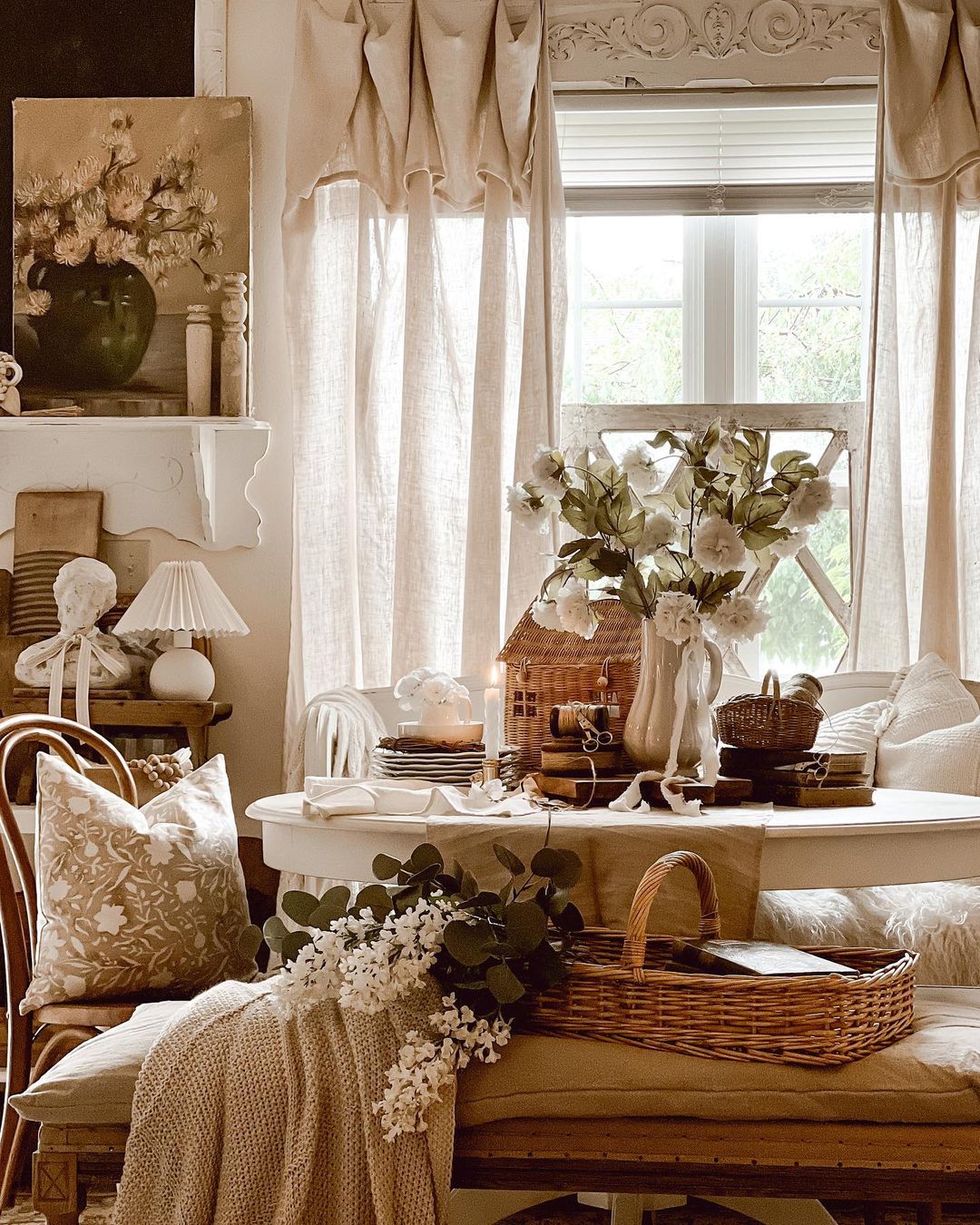
Start with whites, creams, soft grays, and warm earth tones on your walls. Give the room a quiet backdrop and your vintage finds and textures will do all the talking for you. Build it up in layers too. Walls first, then furniture, then the smaller textiles and accessories, so the warmth settles in gradually instead of all at once.
Quiet doesn’t mean boring, by the way. A cream wall with warm wood tones and a soft gray sofa still feels rich, especially once a few natural elements and reclaimed pieces show up behind it.
2. Rustic Charm & Distressed Finishes
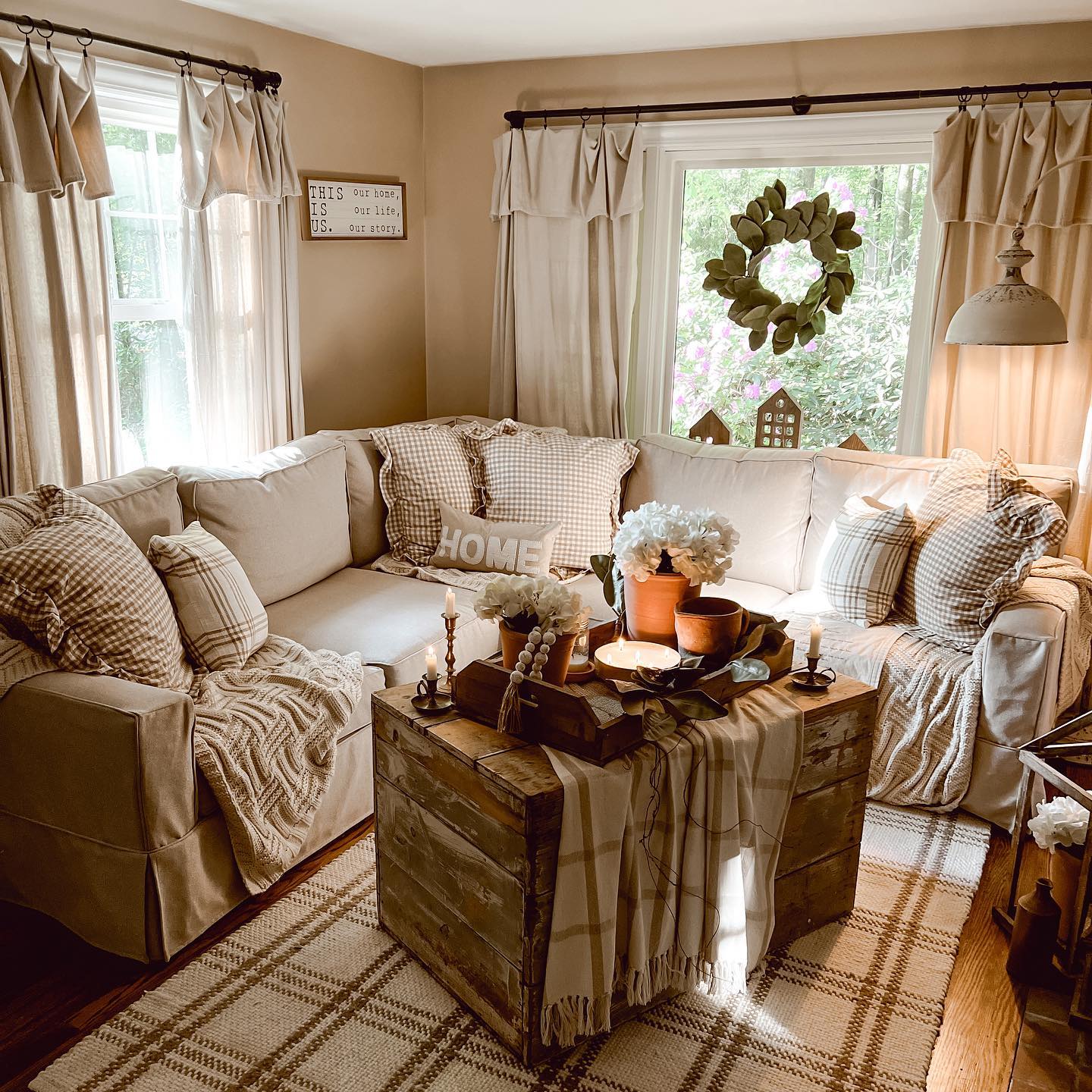
You can tell when a piece of furniture has actually been lived with, rather than just delivered last Tuesday. Want to distress something yourself? Start small. Sand the edges, try a chalk paint finish, or add just a hint of crackle. A few honest marks do more for a room than a whole set that’s been artificially aged.
You’ll see the same instinct in floors and finishes too. A worn or hand-finished farmhouse tile can give a kitchen or bathroom that same lived-in character underfoot.
3. Natural & Reclaimed Materials
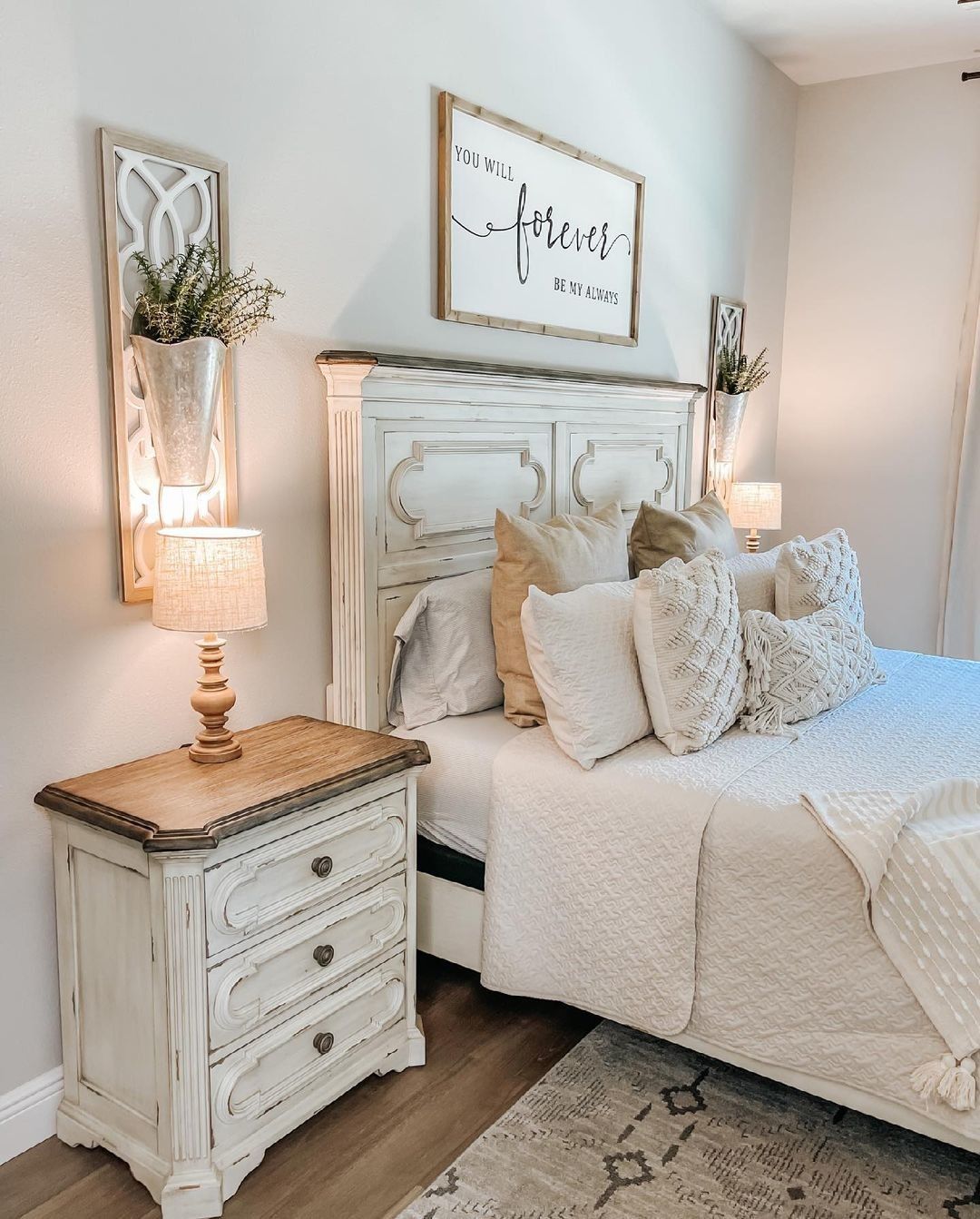
Wood, stone, and metal are the backbone of this whole style, mostly because none of them try too hard. Barn wood makes a beautiful mantel, headboard, or shelf. A reclaimed wood island next to sleek countertops does more for a kitchen’s personality than either piece could manage on its own.
Look for natural materials that would feel just as at home outside as they do in your living room, and let the texture stay visible rather than painting over it.
4. Time-Honored Furniture
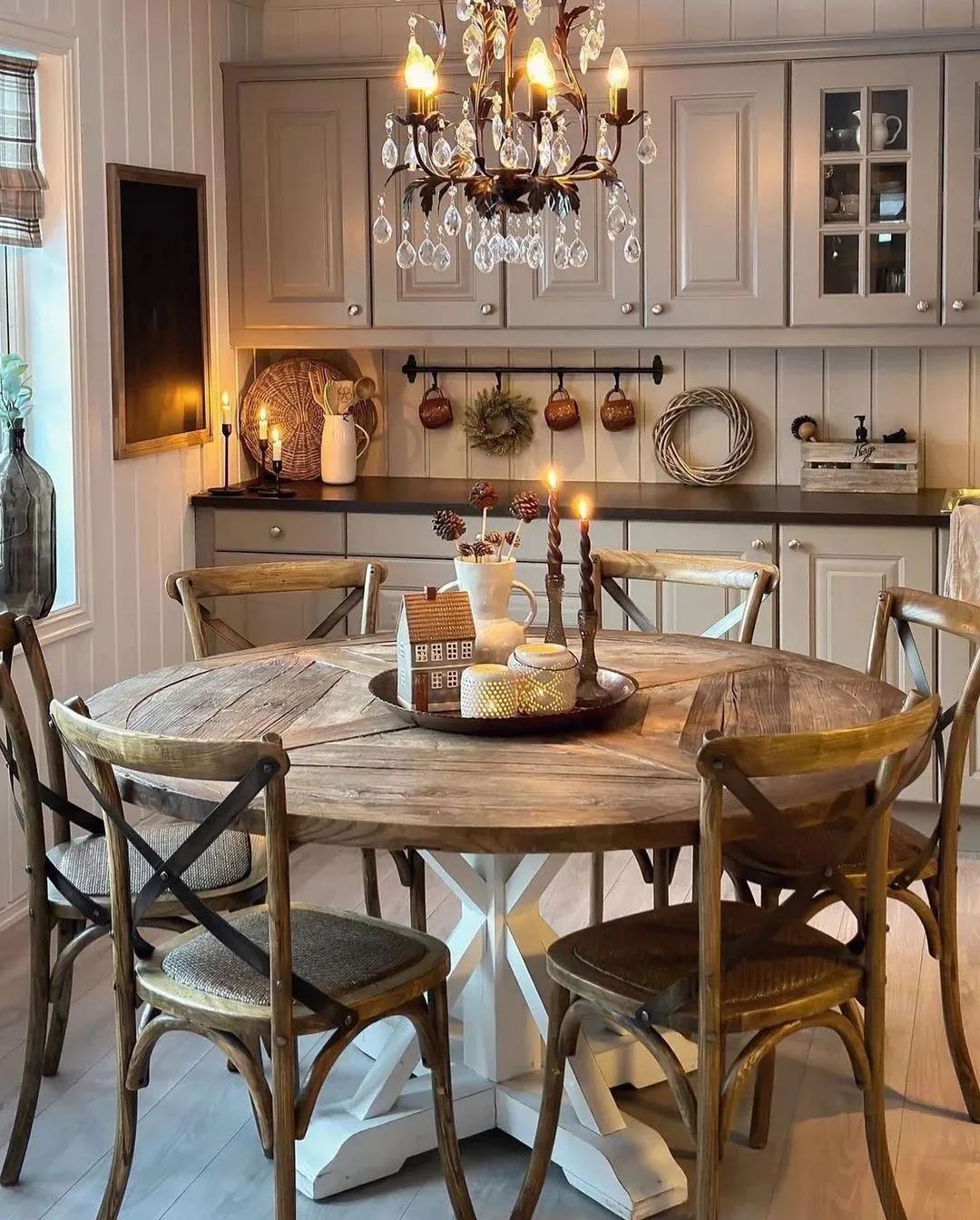
A farmhouse table is where the real meals and the real conversations happen, so let it anchor the room. Windsor chairs, simple benches, pieces built to be used every day rather than just admired, that’s the backbone here.
The farmhouse living room shows this balance well, pairing a sturdy coffee table with newer upholstered seating. At the dinner table, a farmhouse bench does the same job, casual and practical, which is really the whole farmhouse spirit in one piece of furniture. Tight on space? A slim end table carries the same character without eating up a whole corner.
5. Vintage & Antique Finds
An old scale. A chipped bit of crockery. A faded old sign. Things like these carry more character than anything brand new could ever fake. Thrift stores, flea markets, estate sales, that’s your hunting ground. And you’re never looking for flawless. You’re looking for something that already has a story built in.
A vintage farmhouse mantel is one of the easiest places to let a single antique do the heavy lifting, since a mantel only needs a few well-chosen things rather than a full collection. Even a laundry room comes alive with the right vintage accents, an old washboard or a well-worn ironing board turning a plain utility space into something with real character.
6. Cozy Textiles & Linens
Cotton, linen, burlap, these are the quiet workhorses that make a farmhouse room feel touchable, not just nice to look at. Layer a few throw pillows in different textures on the sofa, drape a throw over the armrest, let the curtains soften whatever light comes through the window.
Pillow covers might be the easiest seasonal swap in your whole house. Try quick pillow updates, lean into something cozier for winter, or add a bit of personality with a striped pillow or a quote pillow that makes you smile every time you walk by.
7. Open Shelving & Simple Vignettes
Open shelves work best when you don’t fill every last inch. A stack of white dishes, a few mason jars, a couple of wooden crates, all of it goes further with a little breathing room between pieces than it would crammed edge to edge.
Same goes for a mantel or an entryway table. Rotate in a few seasonal pieces instead of building one permanent display, and let each item earn its spot rather than just filling space because the shelf looked empty.
8. Farmhouse Lighting
Pendant lights with metal shades, a wrought-iron chandelier, warm little sconces down the hallway, in a farmhouse home your lighting is doing double duty as decor too. Layer a few sources instead of leaning on one overhead fixture, and keep your bulbs warm, not that stark white that flattens a room.
If you want to go deeper, layering lighting throughout a whole room or picking the right fixture over a dining table are both worth a look. And don’t sleep on sconces. They’re worth adding throughout the house or just framing your entryway.
9. Whimsical & Functional Accents
The best farmhouse accents actually earn their keep: vintage hooks by the door, wire baskets for blankets, a chalkboard for the grocery list. A barn door can double as a pantry cover and save you floor space. A wooden crate holds firewood in winter and folded blankets the rest of the year.
Wire baskets show up everywhere in farmhouse homes for exactly this reason. They solve a real storage headache while adding texture at the same time. Function first almost always reads as more authentic than decoration chosen purely to look pretty.
10. Signature Patterns
Gingham, stripes, simple florals, that’s farmhouse’s whole pattern vocabulary, and a little goes a long way. Start with just one, a striped runner or a few gingham cushions, before you layer in a second. These patterns work because they stay humble instead of trying to steal the whole show.
Buffalo check gets its own special mention here. It’s become nearly synonymous with farmhouse style, especially around the holidays. Used sparingly on a pillow, a throw, or a runner, it makes a strong graphic statement without overwhelming the neutral base underneath.
11. Architectural Details
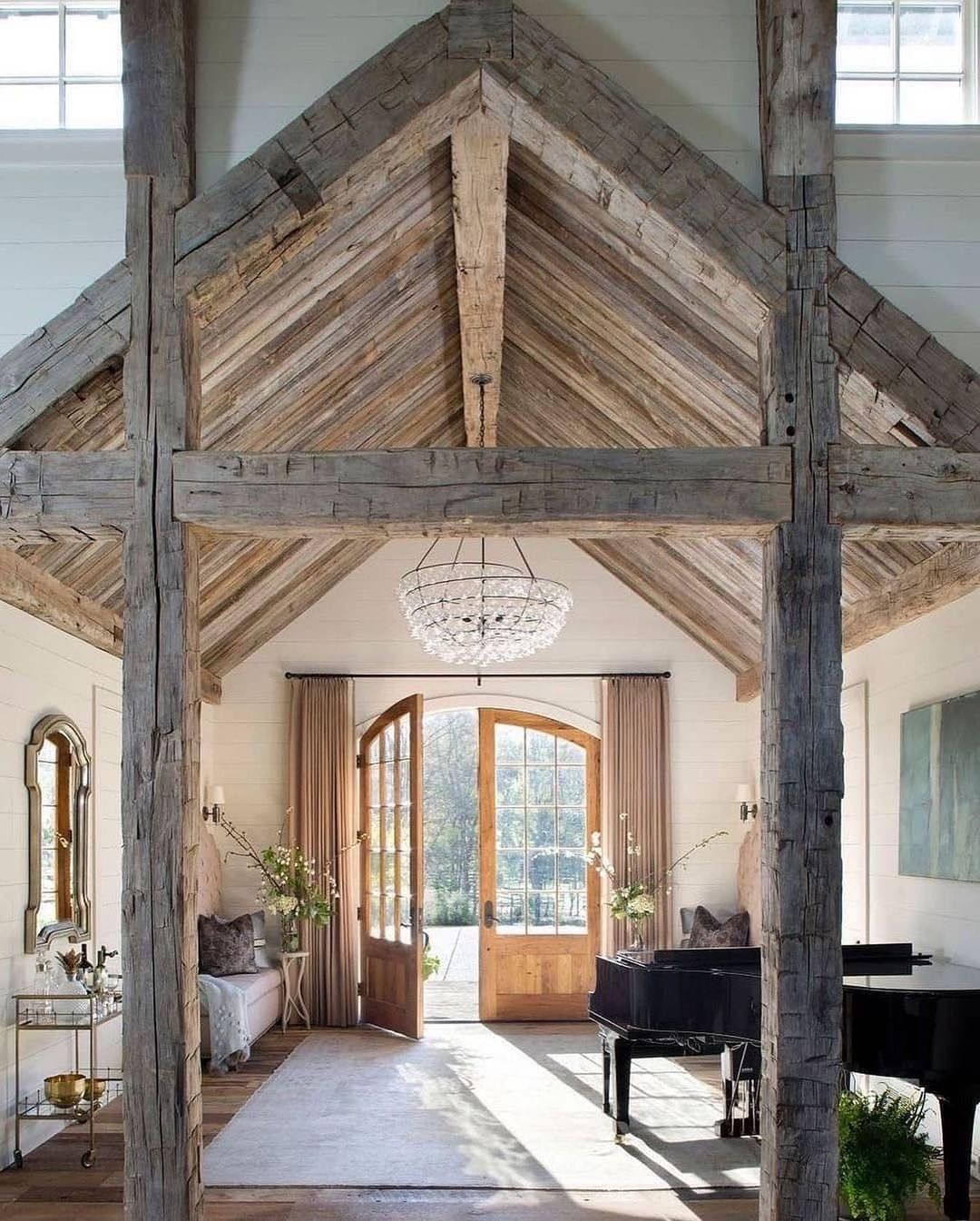
Shiplap. Beadboard. Wainscoting. Any one of these brings texture into a room without a single extra object needed. Start with one wall or one hallway rather than committing the whole house at once, and let those panel lines do work a heavier decor piece would otherwise have to do.
That same idea carries all the way to the staircase. Farmhouse stair railing designs bring that same rustic detail to a part of the house that usually gets left purely functional.
12. Farmhouse Wall Art
Botanical prints, an old map, maybe a farm-animal print here or there, wall art in a farmhouse home should feel collected over time, not matched to a color chart. Pick what actually means something to you first. The farmhouse feel takes care of itself once the natural materials and slightly aged frames are already doing their part in the room.
A farmhouse mirror belongs in this conversation too. A good mirror does the visual work of art while making a room feel bigger and brighter, which comes in especially handy in a small entryway or bathroom.
13. Personal Touches & DIY
A hand-painted sign, a quilt that’s been in the family for years, a gallery wall mixing your kid’s drawing with an old print you love, these are what keep a farmhouse home from feeling like a showroom. Start small if this is new to you. Distress a picture frame, paint a tray, letter a simple sign yourself. A little rough around the edges is fine. What matters is that the room feels like yours.
This is also where your home can lean into its own version of the style. Some homes go industrial farmhouse, mixing in metal accents and exposed fixtures alongside the rustic base. Others lean coastal farmhouse, keeping the palette even lighter with beachy textures woven in. Neither one’s more “correct.” They’re just two honest takes on the same foundation.
14. Fresh Florals & Greenery
A vase of whatever’s in season beats a permanent arrangement every single time. Sunflowers in summer, dried wheat come fall, a simple eucalyptus wreath once winter rolls in, let your greenery shift with the calendar the way the actual outdoors does. New to keeping plants alive? Start easy with a succulent or a few eucalyptus branches. You really can’t go wrong there.
A good farmhouse vase is worth the investment for exactly this reason. One good vessel can carry you clear through every season if you just change what’s inside it. Same goes for planters out on the porch or windowsill.
15. Farmhouse Table Settings
Your farmhouse table doesn’t need matching china. Mismatched vintage plates and a couple of simple linen napkins do more for the mood than any full set ever could. Keep your centerpiece low and natural, wildflowers in a mason jar, a few candles tucked into driftwood. You want a table that invites people to linger, not one that makes them sit up straight and behave.
This really comes alive around the holidays, when Thanksgiving and Christmas table runners and a full Christmas table setting become the whole dining room’s focal point for the season.
16. Inviting Entryways
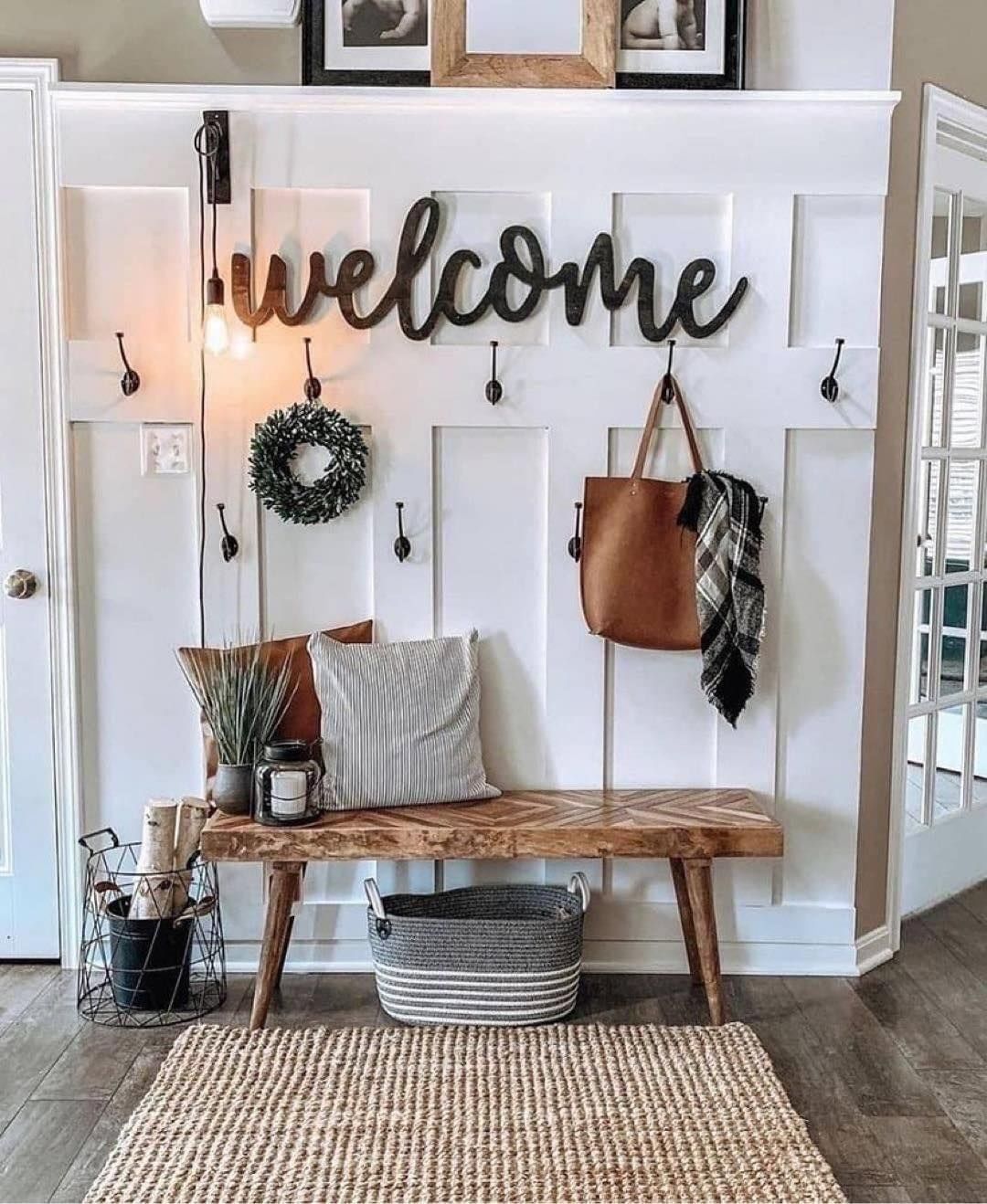
Your entryway sets the tone before anyone’s even had a chance to sit down. A farmhouse entryway really only needs a few pieces: a reclaimed bench, a coat rack with a little age on it, a basket for scarves and mittens. Keep the welcome simple and useful rather than styled down to the last inch.
A good farmhouse bench is usually the hardest-working piece in the whole entryway, giving guests somewhere to sit while they kick off their shoes. And if you want a slightly different spin on the same space, a modern farmhouse foyer keeps the warmth while leaning a touch more current.
17. Farmhouse Outdoor Spaces
Farmhouse style doesn’t stop at your back door. A weathered bench under a tree, galvanized metal planters, a few lanterns with a worn finish, all of it carries the same warmth outside that you’ve already built indoors. Mix wood, metal, and greenery the same way you would inside, and let the plants do most of the talking.
A farmhouse porch swing might be the most iconic piece on this whole list, and both your front porch and patio are worth refreshing with the seasons rather than leaving the same year round.
Which Kind of Farmhouse Is Yours?
Not every farmhouse home looks the same, and that’s a good thing. Modern farmhouse leans into cleaner lines and a slightly more current furniture mix, while traditional or rustic farmhouse stays closer to the heavier, more weathered look this whole guide has been describing. Add in the industrial and coastal versions we touched on earlier, and you’ve got a handful of honest directions to take the same foundation. None of them is the “real” one. Farmhouse has always been a little bit regional and a little bit personal, which is exactly why it bends so easily toward whatever your own home already leans toward.
A Word on Overdoing It
Farmhouse style has had its ups and downs over the years, and most of the backlash comes down to the same thing: too much of a good idea, all at once. A single mason jar is charming. A kitchen full of them starts to feel like a costume. Same goes for signage. One heartfelt sign by the door is sweet. Five identical “Live, Laugh, Love” signs down a hallway reads as a theme, not a home.
The fix is simple, and it’s really the same advice as the rest of this guide. Pick the pieces that mean something, keep the palette calm, and let a few well-worn originals carry more weight than a dozen matching reproductions. Farmhouse holds up best when it looks like it happened over years, not like it arrived in one big order.
Bringing It All Home
That crate by my front door is still there, still holding blankets, still doing exactly the job it was built for a hundred years before I ever found it. That’s really the whole point of farmhouse style: noticing what’s already worn in, useful, and a little bit beautiful, and giving it a place to stay, rather than chasing a look off a shelf.
Start with one room, one piece, one small change. The rest tends to follow on its own.
Farmhouse Style Through the Seasons
Farmhouse decor moves with the calendar more than almost any other style on this site, and that’s part of the fun of it. Come fall, that might mean giving your front porch a refresh, styling your coffee table with a few warm seasonal touches, or working through our complete farmhouse fall decor guide one room at a time. That same autumn mood carries right into the living room and even the bedroom, where a few layered textiles do most of the heavy lifting.
Winter brings its own version too, from rustic Christmas decor for every room in the house to something quieter once spring and Easter roll back around.
Farmhouse Style Room by Room
Beyond these 17 elements, most farmhouse questions really come down to one specific room. For more on each one, take a look at:
- Farmhouse kitchens
- Farmhouse dining rooms
- Farmhouse living rooms
- Farmhouse bedrooms and farmhouse bedding
- Farmhouse bathrooms and bathroom accessories
- Farmhouse laundry rooms
Happy decorating, one worn-in piece at a time.
Related Posts:
- Farmhouse Decor Accents for the Living Room
- Farmhouse Elegance Meets Comfort: How to Achieve Your Bedroom Retreat
- Rustic and Chic: How to Create a Farmhouse Living Room
- How To Get The Farmhouse Style Kitchen Look
- How To Get Your Dining Room To Look Farmhouse-Chic
- How To Create An Inviting Farmhouse Style Entryway
- How To Get The Farmhouse Bathroom Look
- Best Bathroom Accessories that will quickly uplift your Farmhouse Look
- How to achieve a Timeless Charm with Farmhouse Lighting
- Best Farmhouse Light Fixture Ideas for the Dining Table
- Farmhouse Pillow Covers for a Quick Decor Update
- Vintage Farmhouse Mantel Decor: Ideas for a Cozy and Rustic Look
- The Best Farmhouse Slim End Table for Your Living Room