
Mid-century modern kitchen design has a quiet confidence that never feels forced. These kitchens feel welcoming, balanced, and thoughtfully put together.
The beauty of this style comes from intention. Every line serves a purpose. Every material adds warmth or contrast. Nothing feels added just to fill space.
This approach to kitchen design was shaped around real life. Spaces were meant to flow easily, support daily routines, and invite people to gather. That mindset still resonates in homes today.
Clean cabinetry pairs naturally with warm wood tones. Sculptural lighting adds personality without taking over the room. Color appears in just the right places, creating interest without distraction.
What makes mid-century kitchens timeless is how they balance form and function. They feel stylish yet comfortable. Designed yet livable.
In this guide, we will explore the most enduring mid-century modern kitchen design features. Each one offers practical ideas you can adapt to your own space.
The goal is not to recreate a specific era. It is to create a kitchen that feels grounded, functional, and beautiful for years to come.
1. Flat-Front Cabinetry with Clean Lines
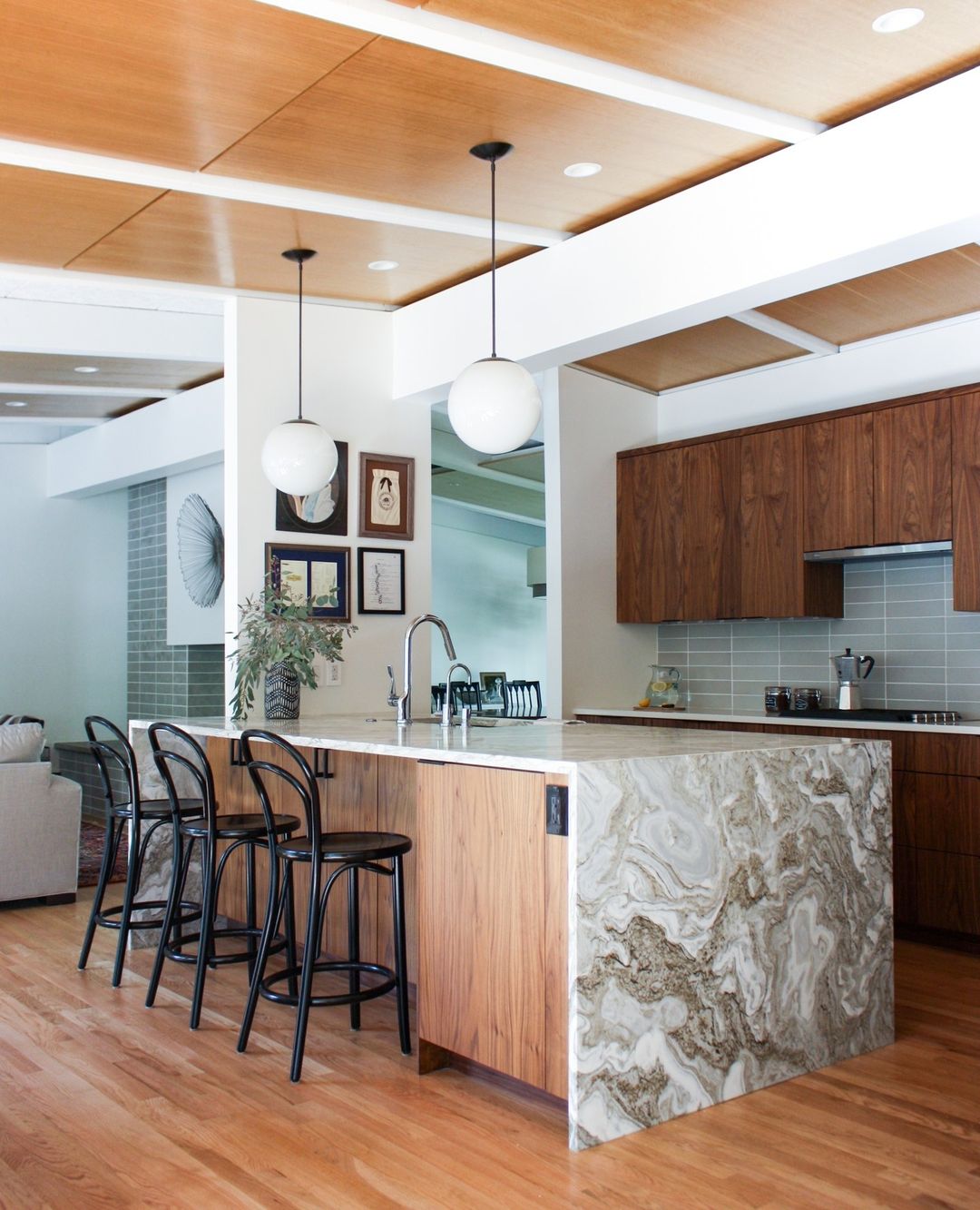
Flat-front cabinetry is one of the most recognizable features of mid-century modern kitchen design. It sets the tone for the entire space without drawing unnecessary attention.
These cabinets rely on simplicity rather than decoration. Smooth surfaces and straight edges create a calm visual rhythm that feels intentional and uncluttered.
The absence of raised panels allows materials to speak for themselves. Wood grain becomes a design feature rather than a background detail. Painted finishes feel crisp and refined.
This style of cabinetry works especially well in kitchens that value flow. Clean lines help the eye move easily across the space, making the room feel more open and balanced.
Flat-front cabinets also pair beautifully with minimal hardware or integrated pulls. This keeps the overall look cohesive and prevents visual interruptions.
While the design feels minimal, it never feels cold. When paired with warm wood tones or soft lighting, these cabinets bring a quiet warmth to the kitchen.
Flat-front cabinetry creates a strong foundation. It allows other mid-century elements to shine while keeping the space grounded and timeless.
When done well, this feature makes a kitchen feel calm, purposeful, and built to last.
2. Warm Wood Tones and Natural Materials
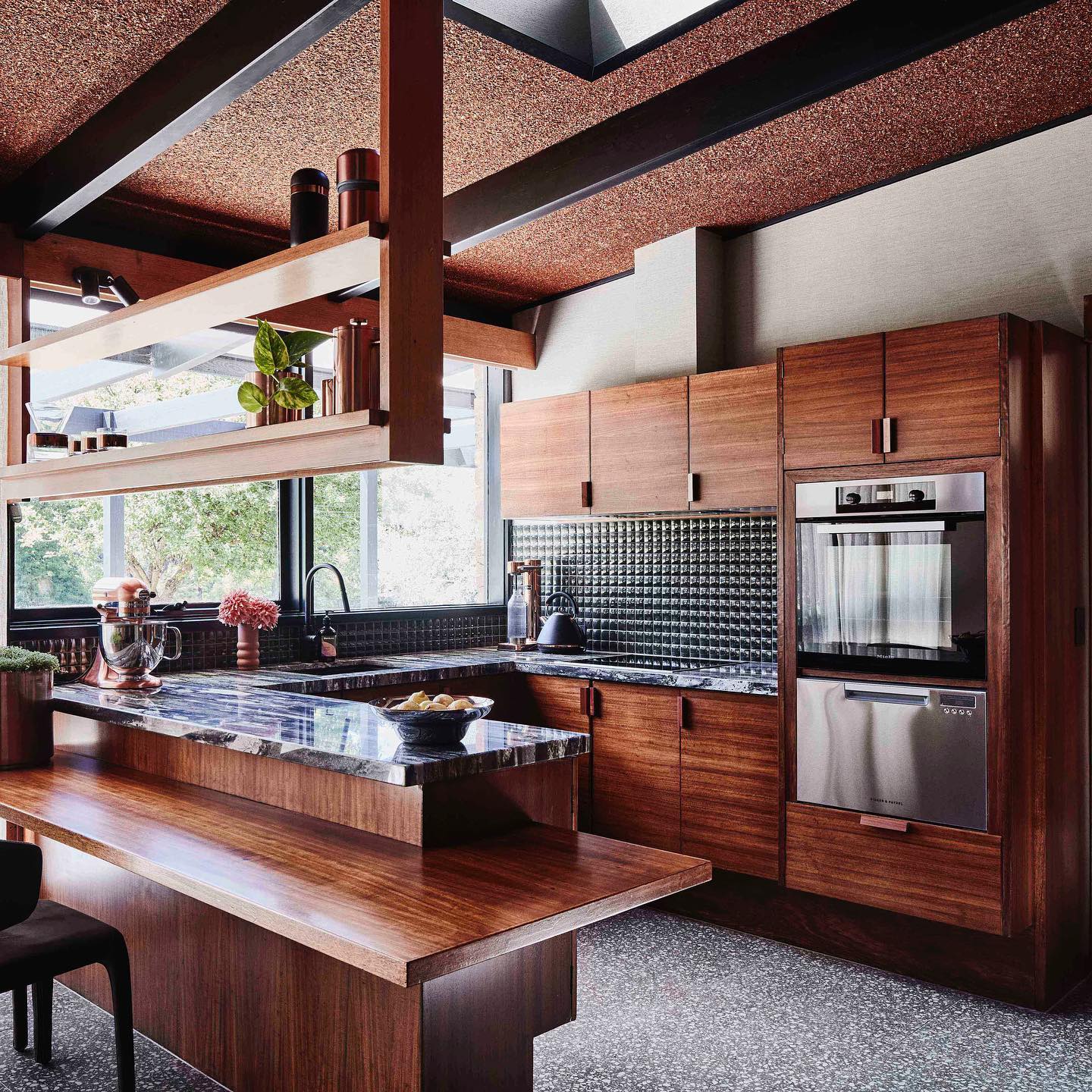
Warm wood tones are at the heart of mid-century modern kitchen design. They bring depth, comfort, and a sense of balance to clean-lined spaces.
Woods like walnut, teak, and oak were commonly used for their rich grain and natural warmth. These finishes age beautifully and develop character over time.
In the kitchen, wood often appears on cabinetry, shelving, or island fronts. Even small touches can soften a space dominated by sleek surfaces.
Natural materials help keep the design grounded. Wood pairs effortlessly with stone, tile, and metal, creating contrast without visual noise.
The key is restraint. Mid-century kitchens use wood with intention, allowing each surface room to breathe. This prevents the space from feeling heavy or dated.
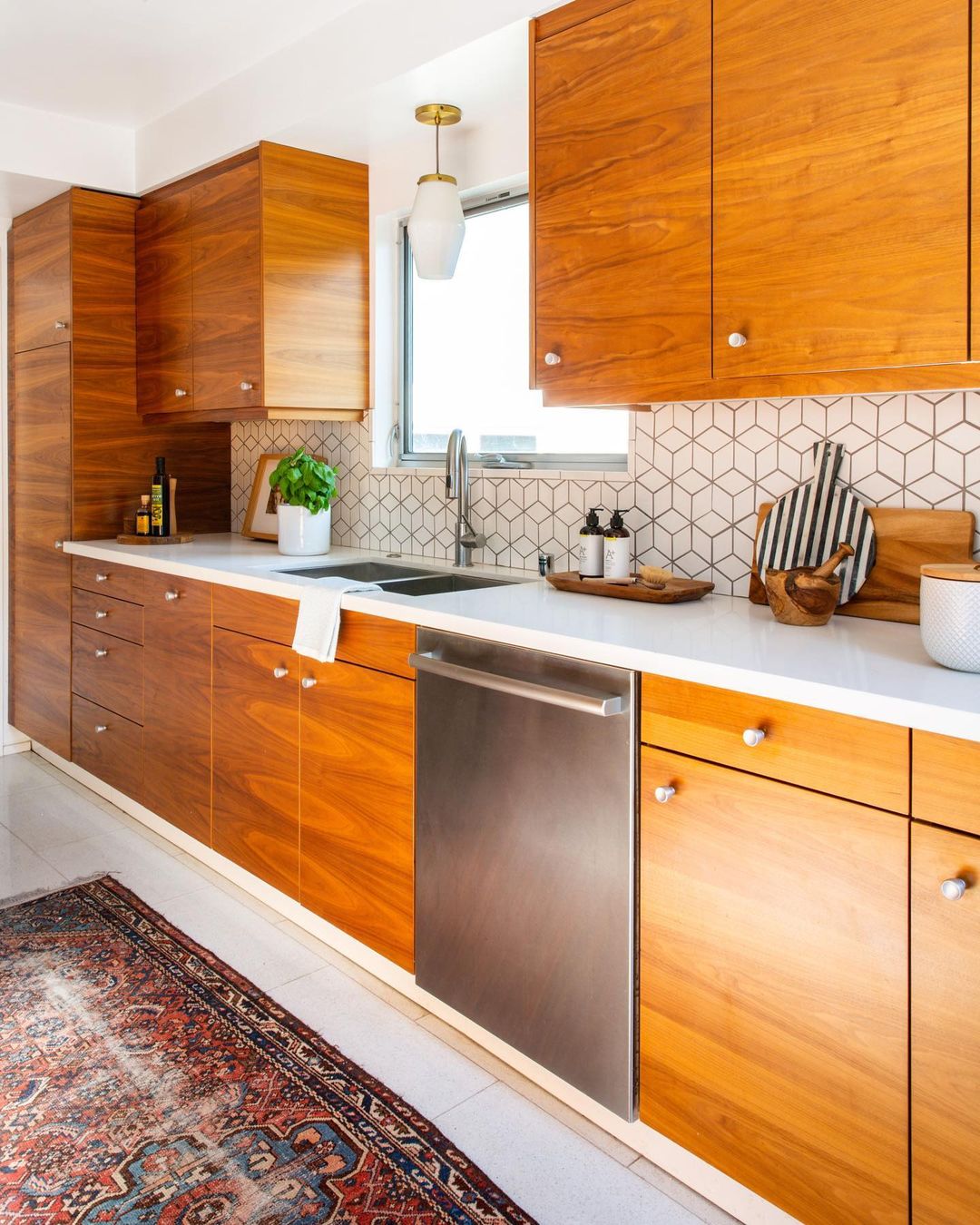
Wood plays a defining role in the style, and understanding how wood creates authentic mid-century character can help guide material choices that feel warm and timeless.
Used thoughtfully, natural materials bring warmth that never competes with the clean structure of the space. They simply belong.
3. Minimal Hardware or Integrated Pulls
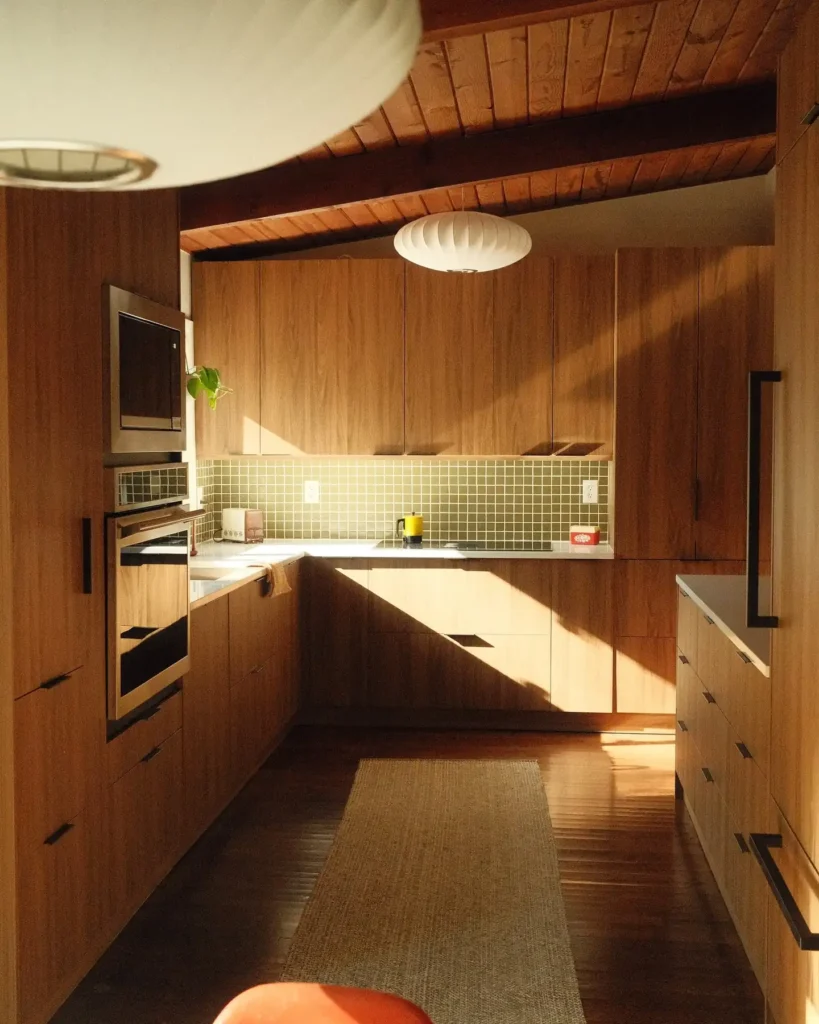
Minimal hardware plays a quiet but important role in mid-century modern kitchen design. It supports clean lines without competing for attention.
Many mid-century kitchens use integrated pulls or recessed finger grooves. These details keep cabinet fronts smooth and uninterrupted.
When hardware is visible, it is often simple and understated. Slim bar pulls or low-profile knobs blend seamlessly into the design.
This approach allows cabinetry to feel more architectural. The focus stays on form, proportion, and material rather than decoration.
Minimal hardware also enhances functionality. Integrated pulls feel intuitive to use and help maintain a streamlined appearance.
Finishes are typically subtle. Brushed metal, matte black, or warm brass add contrast without overpowering the space.
By keeping details restrained, the kitchen feels cohesive, calm, and thoughtfully resolved.
4. Functional, Open Layouts
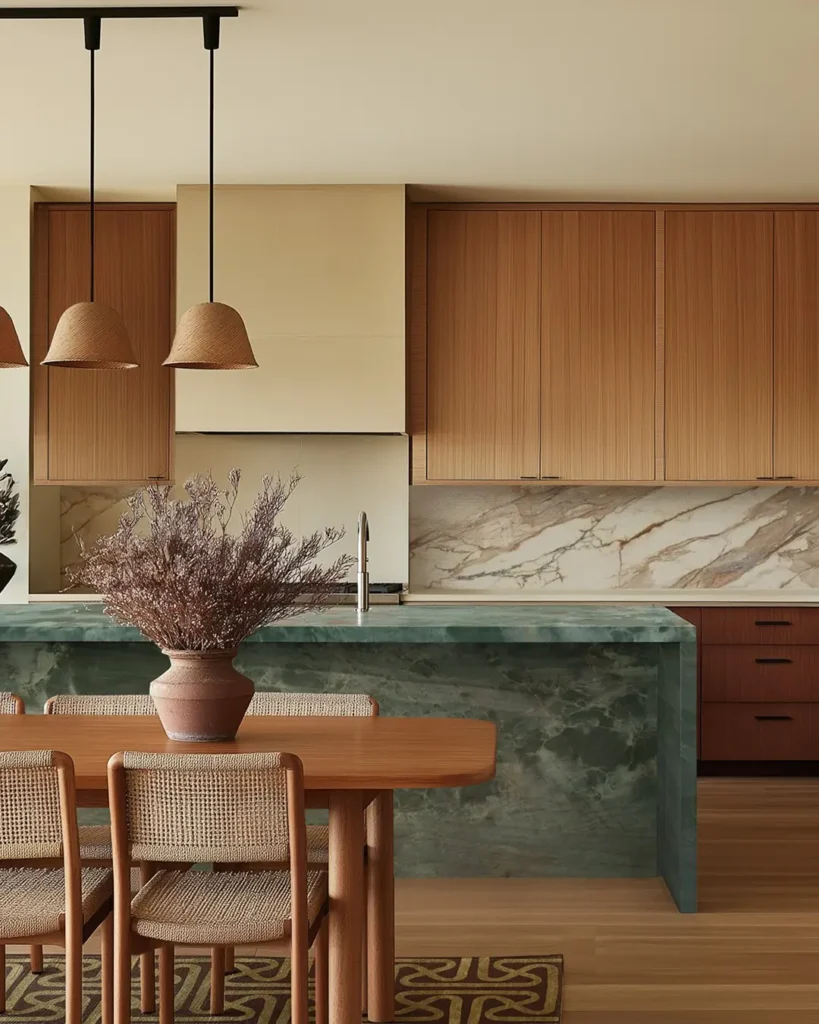
Functional layouts are a defining feature of mid-century modern kitchen design. These kitchens were planned around movement, ease, and connection.
Open layouts allow the kitchen to flow naturally into dining and living areas. This creates a sense of openness without sacrificing purpose.
Sightlines are clear and intentional. Counters, islands, and walkways are placed to support daily routines without feeling crowded.
This emphasis on flow and usability closely aligns with designing kitchens that balance function and beauty, where thoughtful layouts support everyday routines.
Even in smaller homes, mid-century layouts prioritize efficiency. Every zone has a role, and wasted space is kept to a minimum.
A functional, open layout supports both everyday moments and shared experiences. It keeps the kitchen feeling active and connected.
5. Statement Lighting with Sculptural Appeal
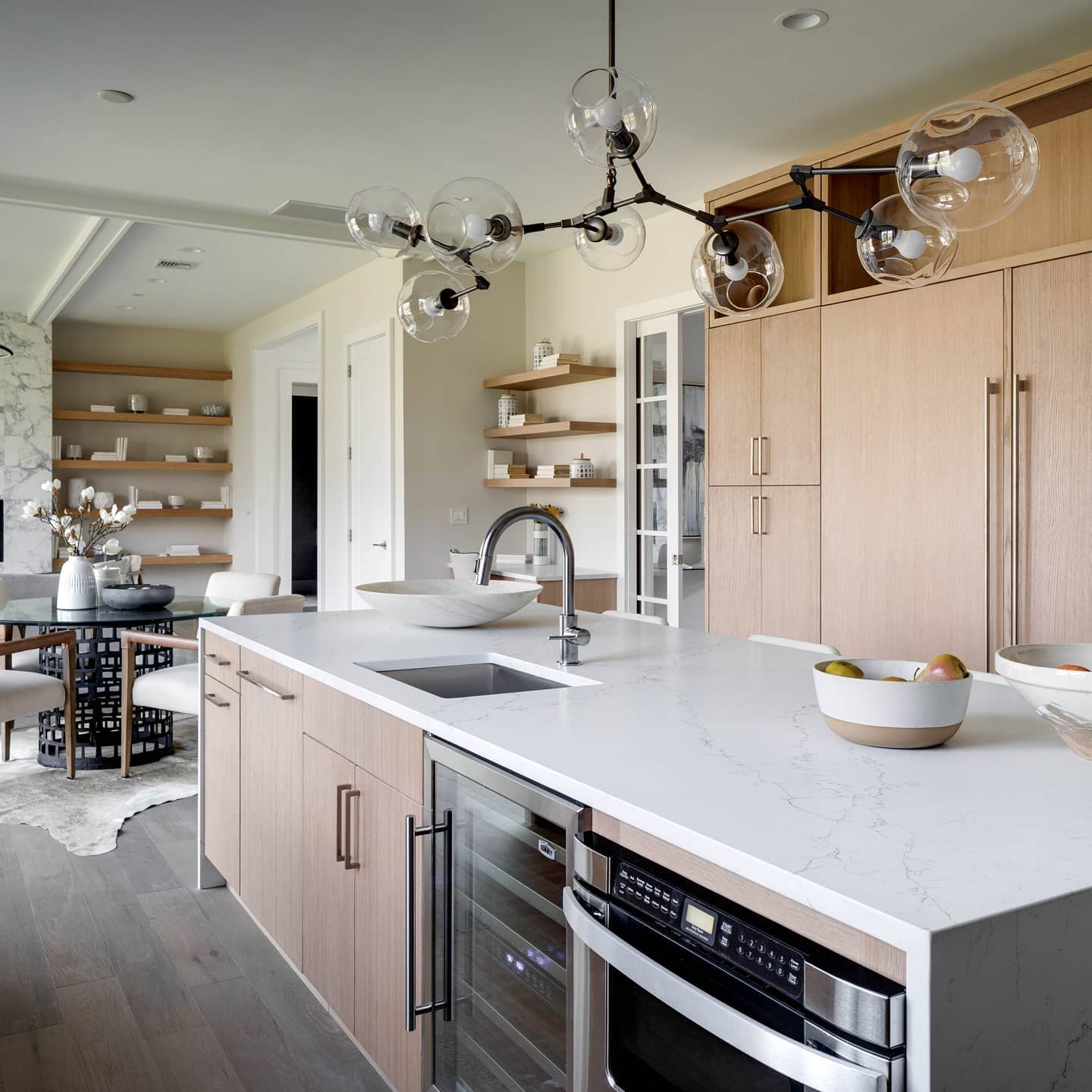
Lighting plays a central role in mid-century modern kitchen design. It adds personality while remaining purposeful and well balanced.
Mid-century lighting often features sculptural shapes and clean silhouettes. These fixtures feel intentional, almost like functional art.
Pendant lights are commonly used over islands or dining areas. Their form creates visual interest without overwhelming the space.
Materials like metal, glass, and wood are often combined. This mix adds depth while staying true to the style’s simplicity.
Warm lighting tones help soften clean lines and smooth surfaces. This creates a kitchen that feels welcoming throughout the day.
When chosen carefully, sculptural lighting becomes a timeless feature that elevates the entire space.
6. Organic Shapes and Soft Curves
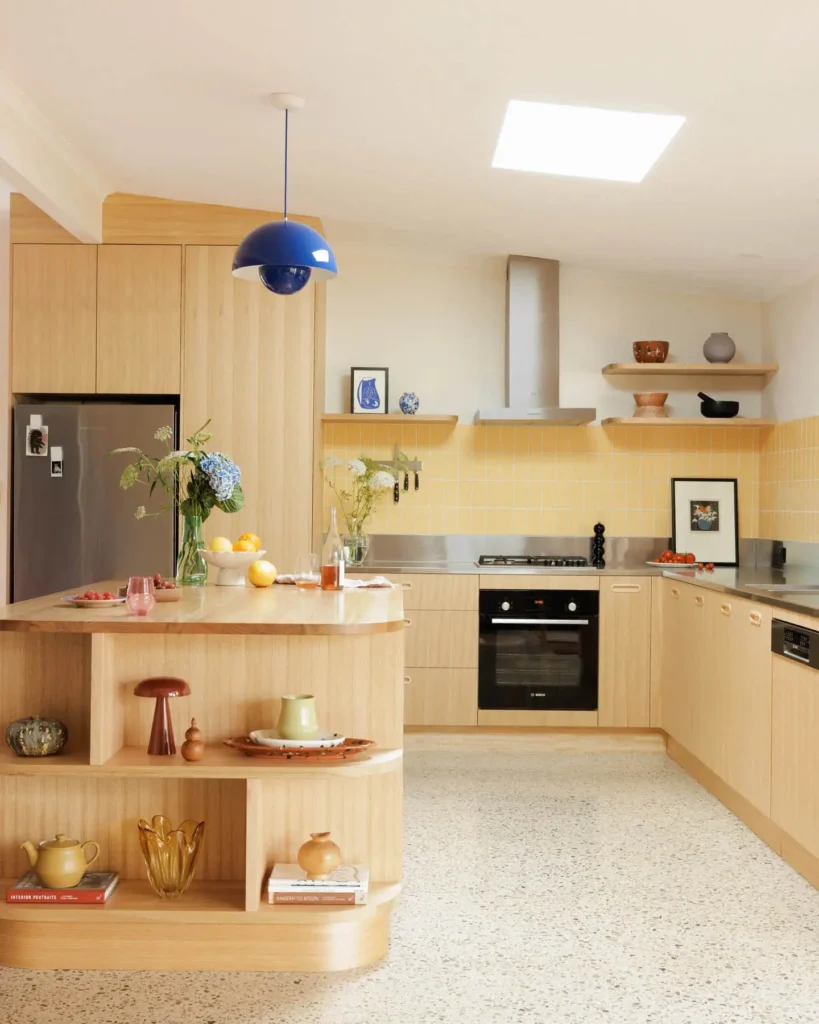
Organic shapes bring a gentle softness to mid-century modern kitchen design. They balance the clean lines that define the style.
Curves often appear in subtle ways. Rounded island corners, arched backs on stools, or softly shaped tables are common examples.
These shapes make the kitchen feel more approachable. They soften the overall look without disrupting its structure.
Mid-century design embraces contrast. Straight cabinetry paired with curved elements creates visual harmony.
When used thoughtfully, organic shapes add warmth and comfort while preserving the kitchen’s clean, timeless character.
7. Bold Yet Balanced Color Accents
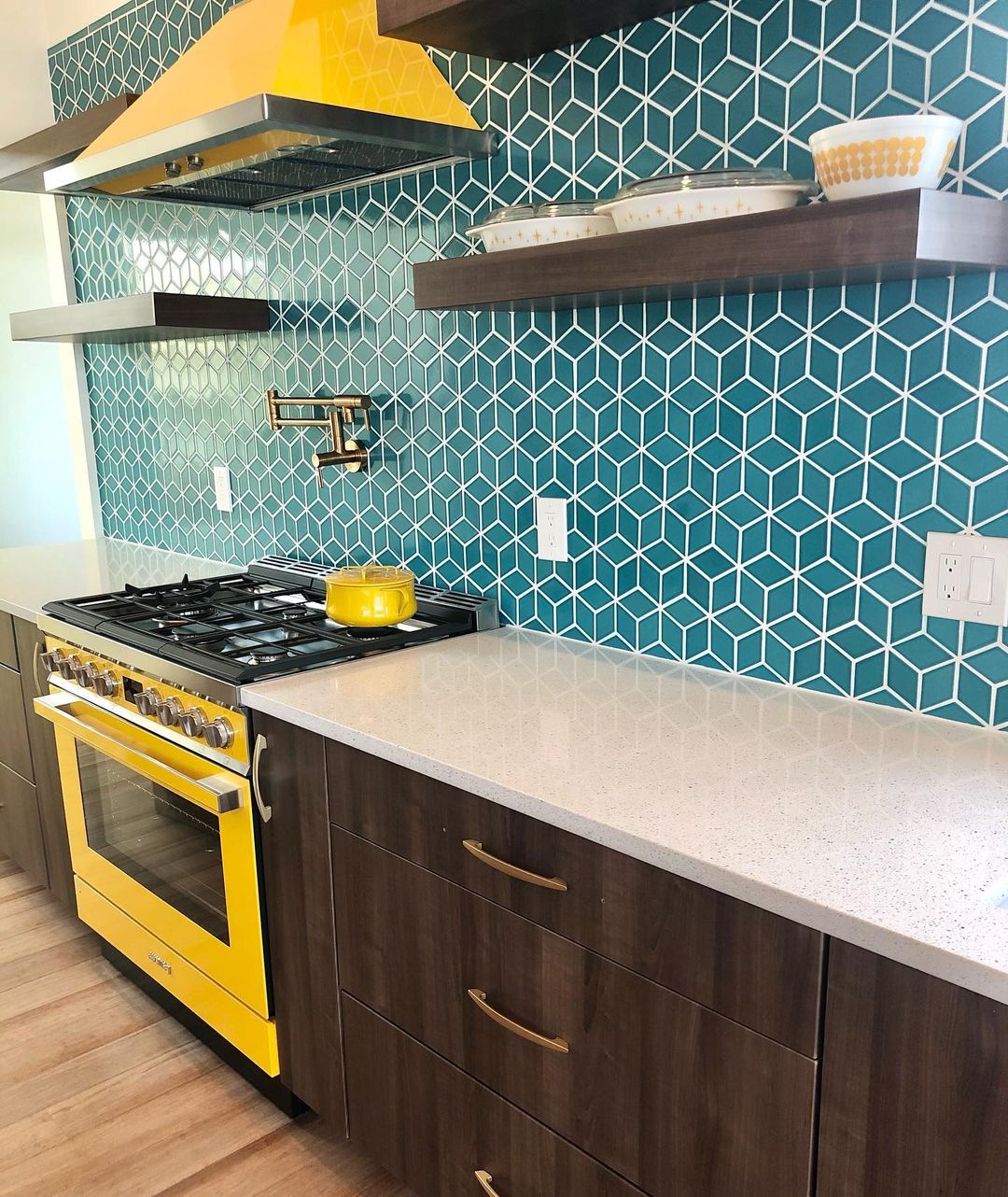
Color in mid-century modern kitchen design is used with intention. It adds personality without overwhelming the space.
Mid-century palettes often include muted greens, warm blues, earthy oranges, and soft yellows. These tones feel grounded rather than trendy.
Color is usually introduced in controlled ways. Backsplashes, accent cabinetry, or bar stools are common choices.
Many mid-century kitchens pair bold accents with warm wood tones. This combination keeps colors feeling timeless and inviting.
When handled carefully, color brings energy and character while maintaining the kitchen’s refined simplicity.
8. Iconic Mid-Century Furniture Elements
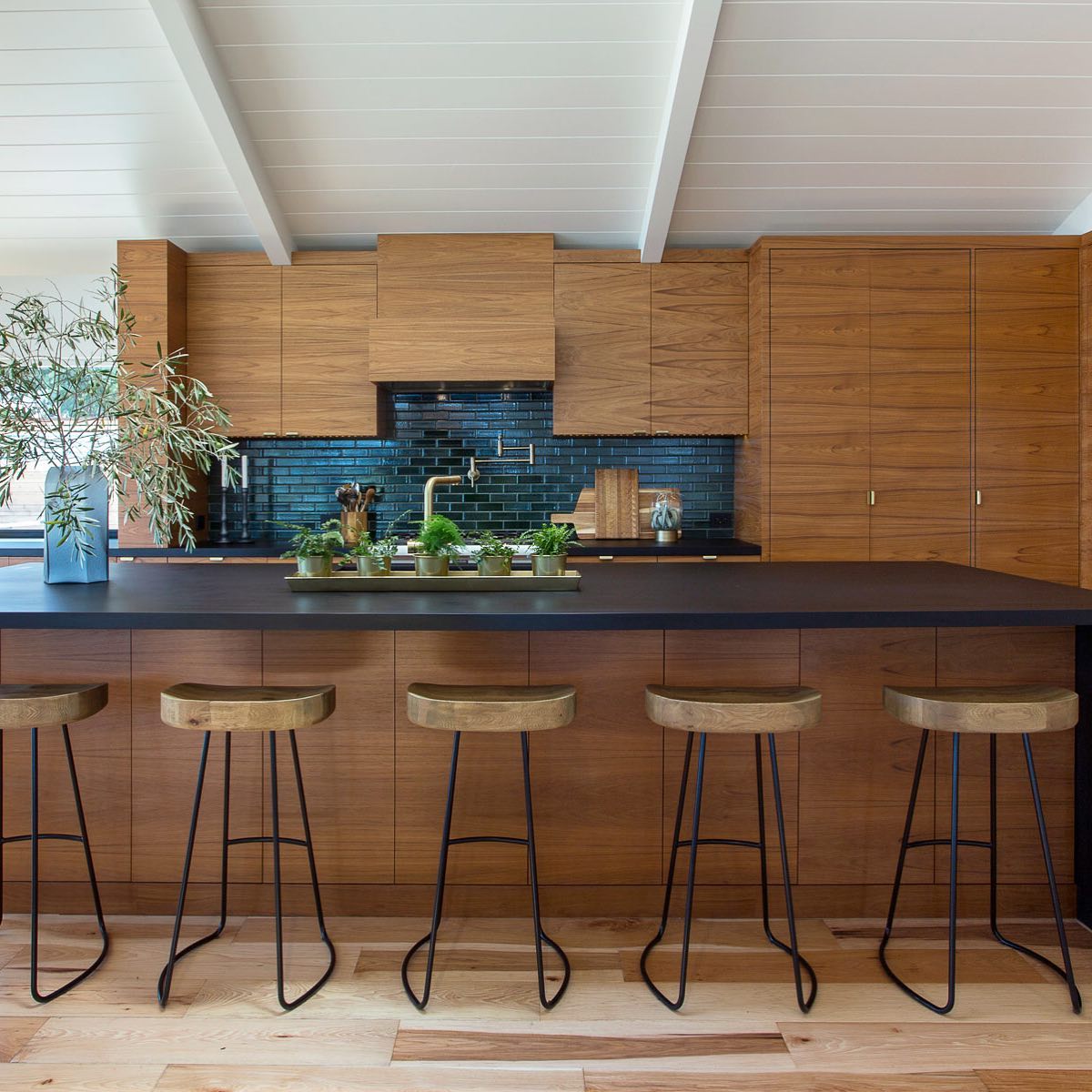
Furniture plays a meaningful role in mid-century modern kitchen design. These pieces often become quiet focal points within the space.
Bar stools and dining chairs are the most common examples. Tapered legs, molded seats, and low profiles are signature features.
These designs feel light and purposeful. They add visual interest without making the kitchen feel crowded.
Mixing furniture elements with modern cabinetry creates balance. The kitchen feels layered but still cohesive.
When chosen thoughtfully, mid-century furniture anchors the kitchen and reinforces its timeless character.
9. A Thoughtful Mix of Materials
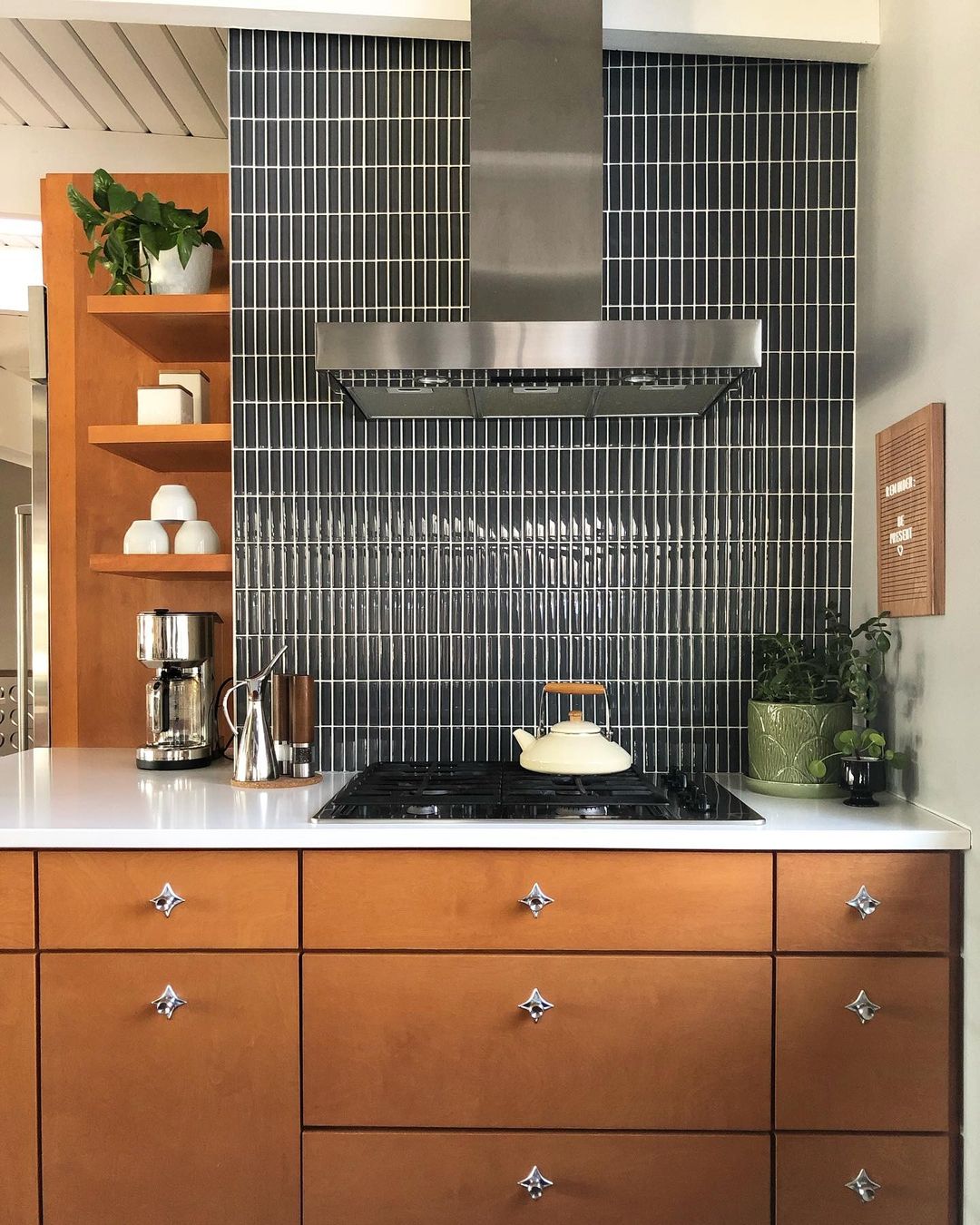
A thoughtful mix of materials adds depth to mid-century modern kitchen design. It keeps the space visually interesting without feeling busy.
Wood is often paired with stone, tile, or metal. Each material serves a purpose while contributing to the overall balance.
Natural materials often work best when paired with softer finishes, similar to the approach used in clean and organic modern kitchen design.
The key is cohesion. Materials should share similar tones or finishes to maintain harmony.
When materials are chosen carefully, the kitchen feels rich, grounded, and effortlessly timeless.
10. Built-In Storage and Smart Functionality
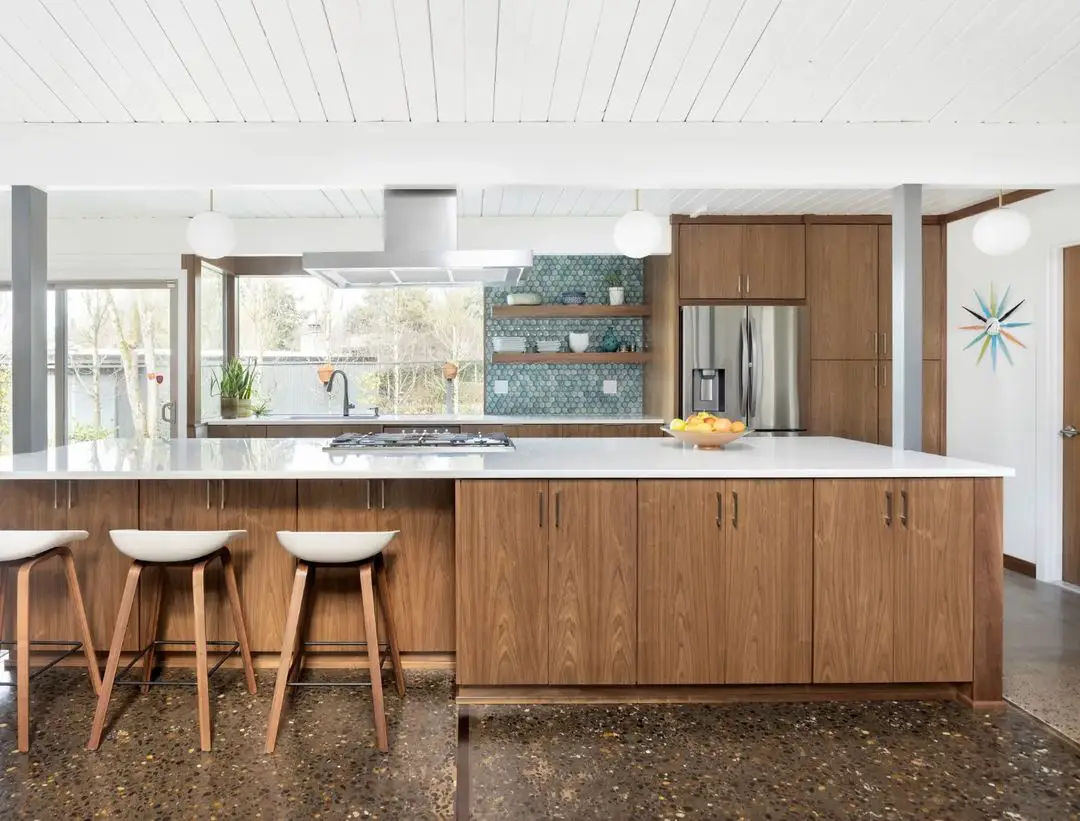
Built-in storage is a cornerstone of mid-century modern kitchen design. It reflects the style’s focus on efficiency and purpose.
Cabinetry is often designed to blend seamlessly into the architecture. Storage feels integrated rather than added later.
Smart storage solutions also support everyday living, and exploring creative ways to maximize cabinet space can help extend functionality without disrupting the design.
Everything has a place, and nothing feels out of reach.
When done well, built-in storage enhances both form and function. It reinforces the timeless practicality of mid-century design.
Conclusion
Mid-century modern kitchen design continues to resonate because it feels intentional and livable. These kitchens are shaped by clarity, balance, and thoughtful choices.
Each feature works together to create a space that supports daily life without feeling overdesigned. Clean lines, warm materials, and smart layouts bring lasting comfort.
What makes this style timeless is its flexibility. It adapts easily to modern needs while holding onto its original sense of purpose.
You do not need to embrace every element to achieve the look. Even a few well-chosen details can shift how a kitchen feels.
For a deeper look at the style beyond the kitchen, exploring the foundations of mid-century modern design offers helpful insight into how this approach carries through the entire home.
Love Mid-Century Modern style? Make sure to save this pin to come back to these MCM design features later!
Related Posts:
- Industrial Chic: Mixing Modern and Rustic for a Beautiful Kitchen
- How to Design a Minimalist Kitchen That’s Both Functional and Beautiful
- How To Get The Farmhouse Style Kitchen Look