


A long narrow laundry room can be one of the most challenging spaces in a home. Limited width, tight walkways, and awkward layouts often make the room feel cramped and inefficient. When every inch matters, smart planning becomes essential. Learning how to maximize space in a long narrow laundry room can completely change how the room functions day to day.
The good news is that even the most narrow laundry rooms can be practical and visually appealing. With the right layout decisions, storage strategies, and design choices, it is possible to create a space that feels organized, efficient, and comfortable to use.
This guide focuses on layout planning, storage solutions, and design strategies that improve flow and usability in long narrow laundry rooms. Whether you are redesigning an existing space or working with a walk through layout, the ideas that follow are practical, flexible, and designed for real homes.
Understanding Dimensions and Layout Considerations
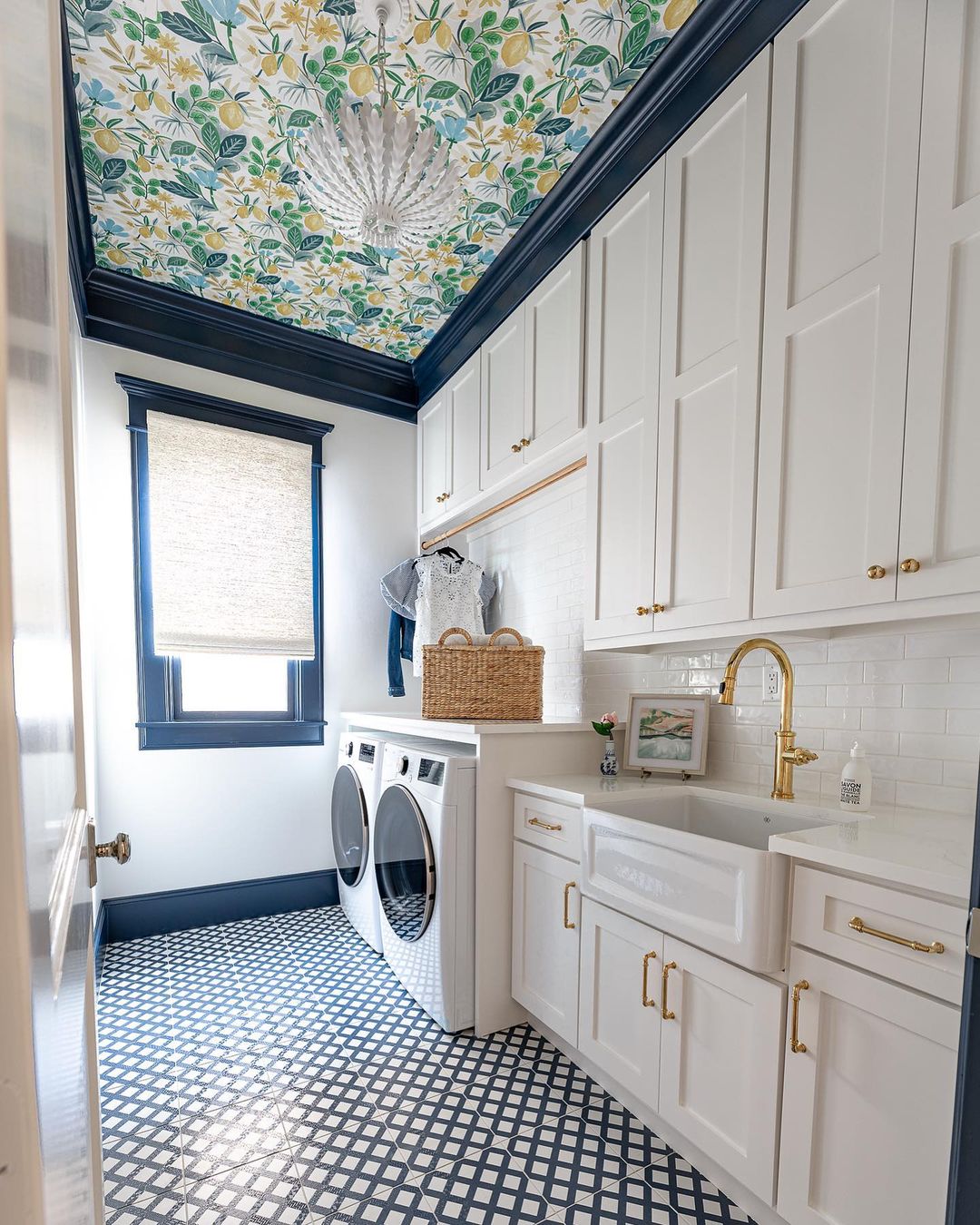
Before diving into space maximizing strategies, it helps to understand the typical dimensions and layout constraints of a long narrow laundry room. These details provide useful context and help guide smarter design decisions.
Why Dimensions Matter in a Long Narrow Laundry Room
A laundry room that is less than five feet wide can feel tight, especially when accommodating full size appliances and storage. In these spaces, layout planning becomes just as important as storage solutions. Door placement, clear walkways, and appliance spacing all influence how functional the room feels during everyday use.
Light colors and simple finishes can also help a narrow laundry room feel more open. Bright walls, reflective surfaces, and mirrors bounce light around the space. Vertical storage keeps the floor clear and improves visual flow.
Design Guidelines vs Code Requirements
Clearances and dimensions discussed in this section are general design guidelines meant to improve comfort and usability. Any new construction or remodel should always follow local building codes and manufacturer requirements, which may vary by location and appliance type.
Practical considerations still matter when planning a layout. A doorway wide enough to move appliances, along with adequate space in front of washers and dryers, supports everyday use and long term functionality.
Special Considerations for Walk-Through Layouts
Walk through laundry rooms present an added challenge because they must function as both a workspace and a passage. Storage solutions should stay slim and unobtrusive to avoid interrupting circulation.
Wall mounted storage, over the door organizers, and folding or retractable doors help maintain flow while keeping essentials within reach. Thoughtful layout choices allow the space to remain functional without feeling like an obstacle in daily routines.
Choose a Layout That Works With the Room’s Shape
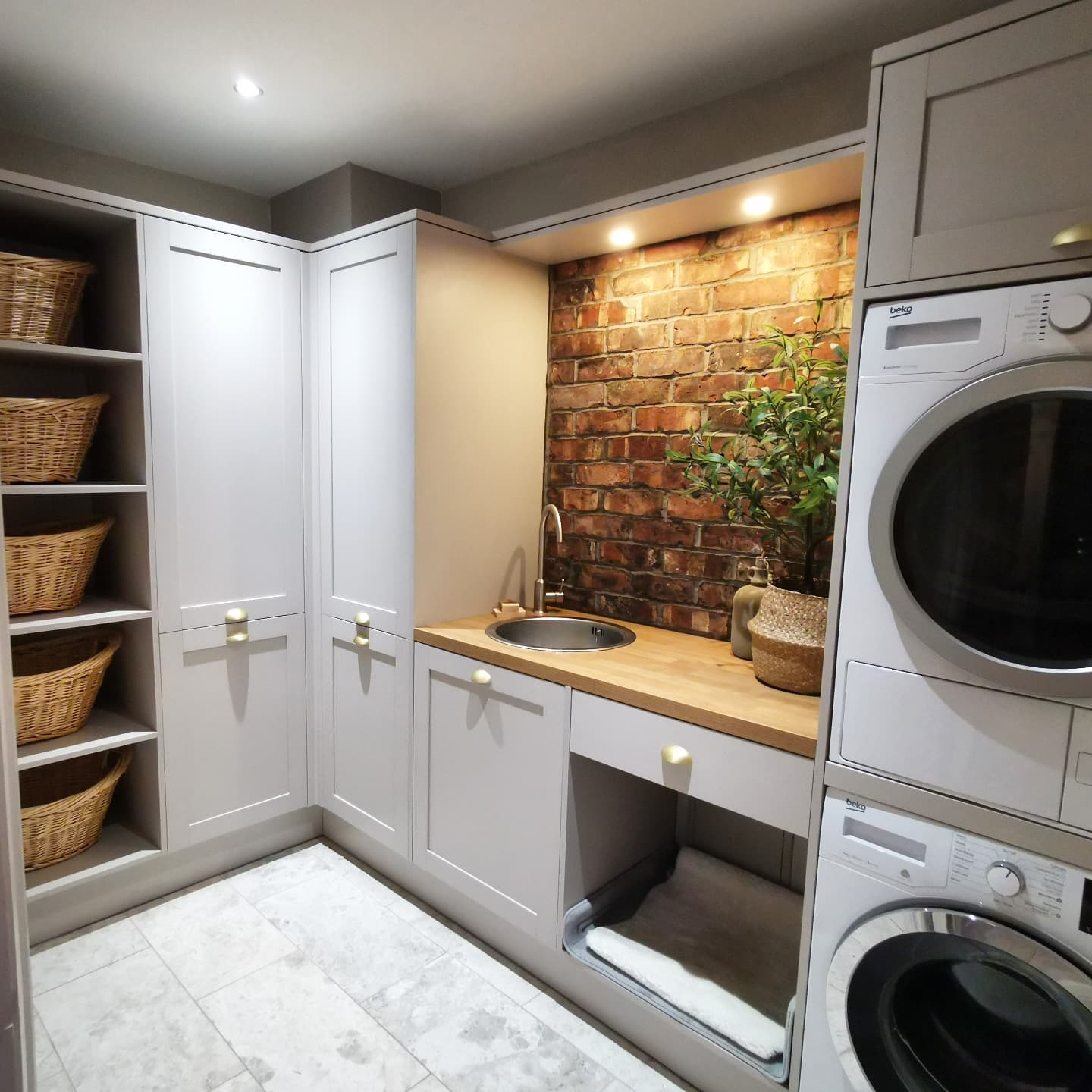
Single Wall Layouts for Very Narrow Spaces
The layout sets the foundation for how well a long narrow laundry room functions. Before adding storage or decorative elements, it is important to work with the natural proportions of the space rather than fighting them.
A single wall layout is often the most efficient option in very narrow rooms. Placing the washer, dryer, and storage along one wall keeps the walkway clear and reduces visual clutter. This approach works especially well when the room also serves as a passage or connects two areas of the home.
Galley Layouts for Added Storage
In slightly wider laundry rooms, a galley style layout can be effective. Appliances and storage are placed on opposite walls, creating defined zones for washing, folding, and storage. To keep the room from feeling tight, cabinets and shelving should stay shallow and consistent in depth.
Stacked vs Side by Side Appliances
Stacking the washer and dryer is another way to reclaim valuable floor space. Vertical stacking allows room for additional storage or a folding surface without increasing the footprint of the appliances. When stacking is not an option, aligning side by side appliances with a continuous countertop helps create a streamlined look and improves workflow.
In narrow spaces where floor area is limited, choosing appliances designed for vertical stacking can make layout decisions easier and improve overall efficiency (Everything You Need to Know Before Buying a Stackable Washer and Dryer).
Maintain Clear Walkways
Regardless of the layout, maintaining clear walkways is essential. Adequate space to open appliance doors and move comfortably through the room improves daily usability. A well planned layout makes the room feel larger, even when square footage is limited.
Use Vertical Storage to Free Up Floor Space
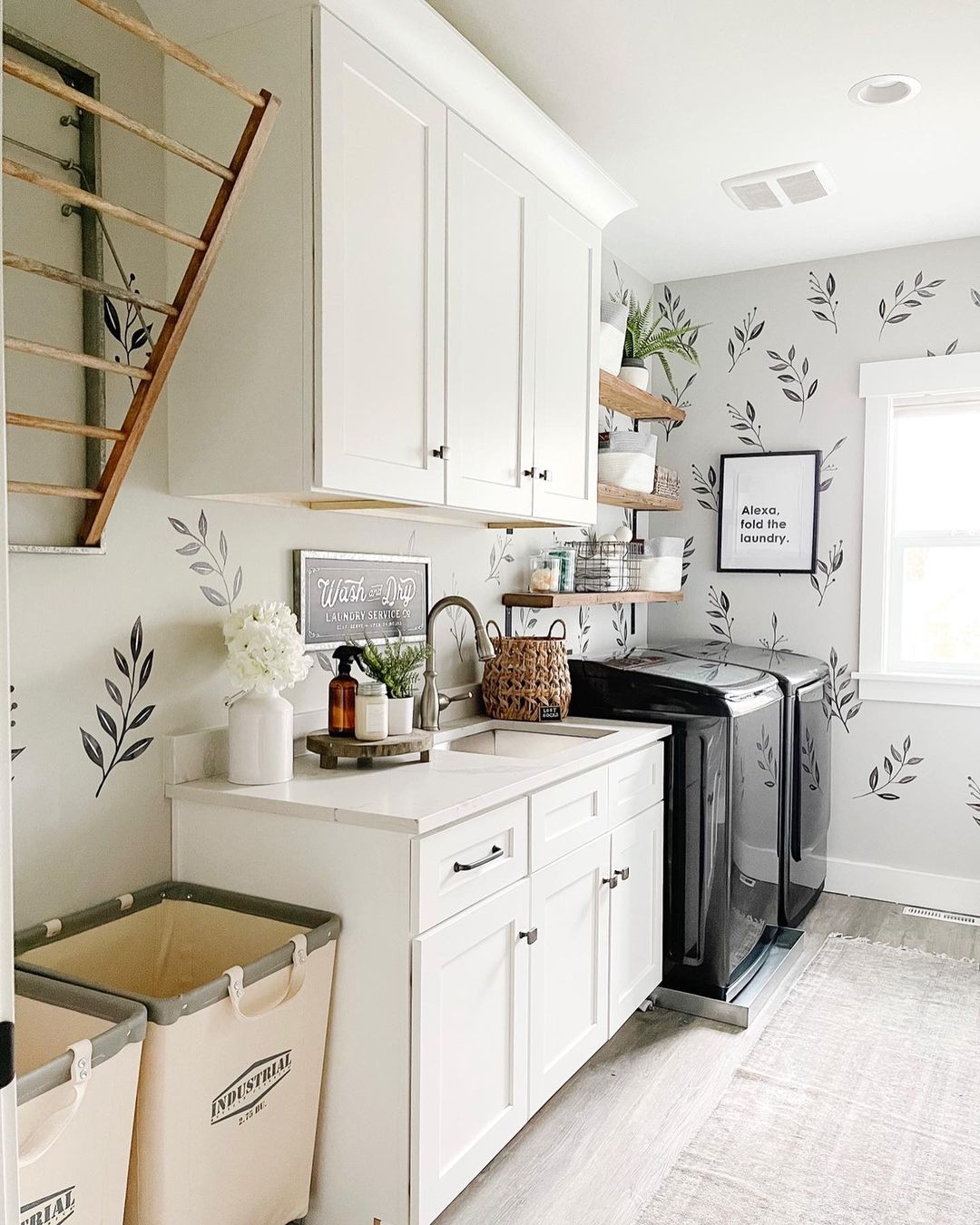
Wall Mounted Shelving for Everyday Essentials
When floor space is limited, vertical storage becomes one of the most effective ways to add function without crowding the room. Wall mounted shelves keep frequently used items accessible while freeing up valuable floor area.
Open shelving works well for detergents, baskets, and cleaning supplies that are used regularly. Keeping shelves within easy reach helps maintain efficiency while preventing the room from feeling cluttered.
Tall Cabinets and Vertical Storage Units
Tall cabinets make use of the full height of the room and provide generous storage in a small footprint. They are especially useful for storing bulk items, cleaning tools, and supplies that do not need to be accessed daily.
In long narrow laundry rooms, vertical cabinets should remain slim to avoid encroaching on walkways. Choosing cabinets with clean lines helps maintain a streamlined look.
Hooks, Peg Rails, and Hanging Storage
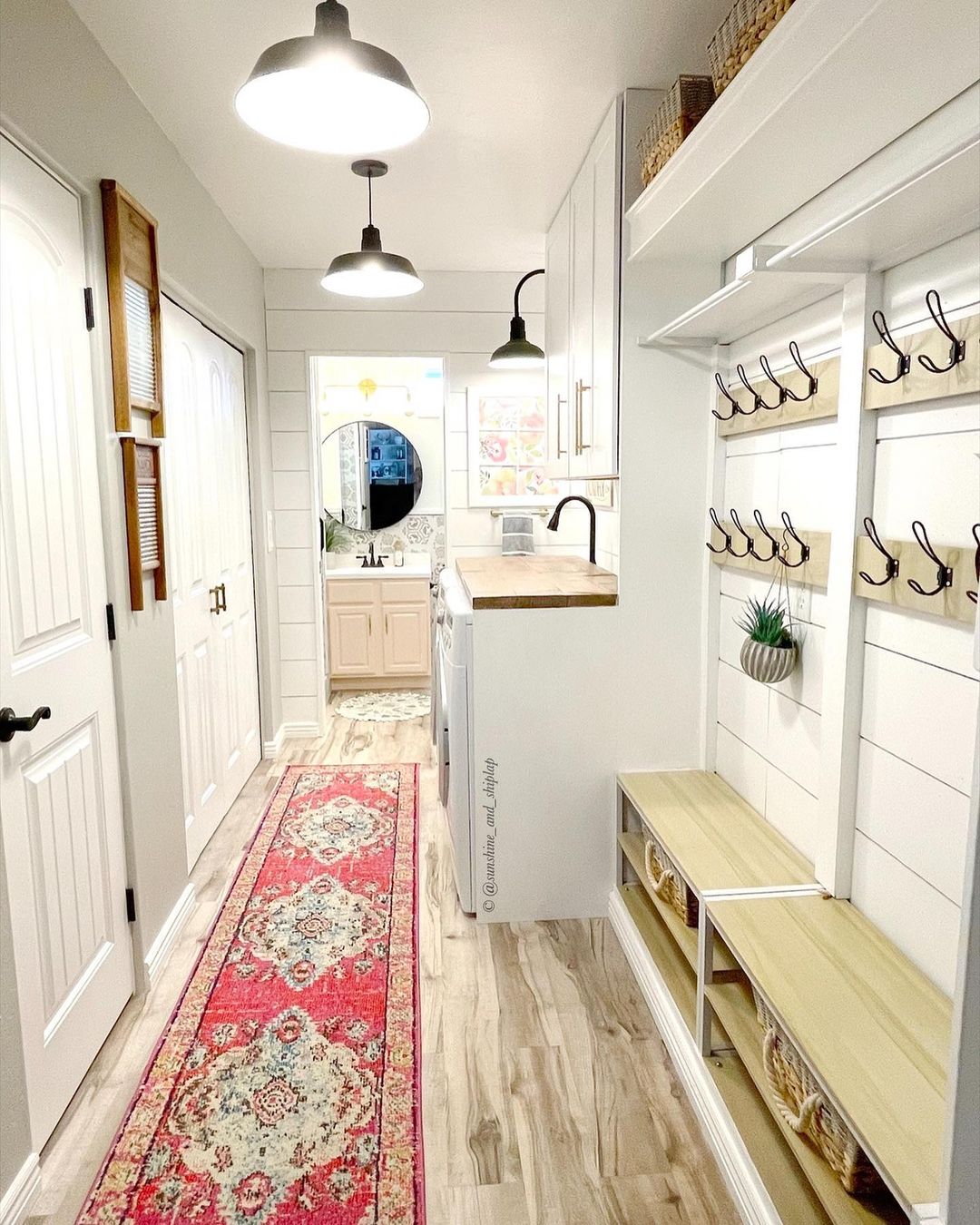
Hooks and peg rails are simple additions that add flexibility to a narrow laundry room. They are ideal for hanging lint brushes, ironing boards, reusable bags, or clothing that needs to air dry.
Mounted higher on the wall, these elements keep items off the floor and counters. This improves both organization and visual clarity. Using pegboards as a flexible vertical storage solution allows frequently used items to stay accessible without cluttering surfaces.
For additional inspiration check out these easy laundry room storage ideas.
Keep Vertical Storage Visually Balanced
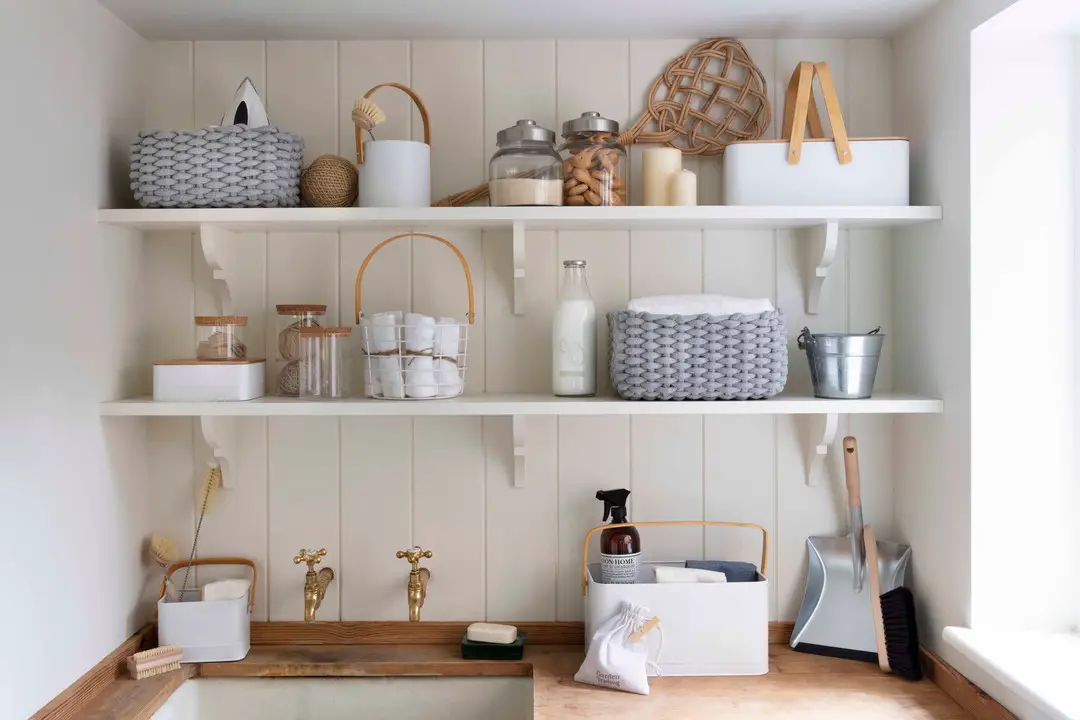
While vertical storage increases capacity, balance is important. Mixing open shelves with closed cabinets prevents the space from feeling heavy or overwhelming.
Spacing shelves evenly and aligning storage elements creates a more cohesive look. Thoughtful placement helps the room feel organized rather than crowded.
Opt for Slim and Space Saving Storage Solutions
Narrow Shelving and Shallow Storage Units
In a long narrow laundry room, bulky storage can quickly disrupt circulation. Slim shelving and shallow cabinets provide storage without overwhelming the space.
Narrow units work well along walls or between appliances where depth is limited. They offer a place for detergents, baskets, and supplies while keeping walkways clear.
In particularly tight layouts, maximizing storage capacity without increasing depth becomes essential for keeping the room functional and clutter free.
Slide Out and Pull Down Storage Options
Slide out organizers make use of tight gaps that would otherwise go unused. These solutions are ideal for storing cleaning supplies, ironing accessories, or laundry products in an organized way.
Pull down drying racks are another space saving option. When not in use, they fold neatly against the wall, freeing up visual and physical space.
Over the Door and Hidden Storage
Over the door storage adds function without taking up floor or wall space. These systems are useful for lightweight items such as lint rollers, spray bottles, or small cleaning tools.
Hidden storage solutions help reduce visual clutter. Cabinets with integrated organizers keep everyday items accessible while maintaining a clean and streamlined look.
Choose Storage That Supports Movement
Every storage choice should support easy movement through the room. Slim profiles and flexible storage prevent the space from feeling cramped.
Prioritizing circulation ensures the laundry room remains functional and comfortable, even in the narrowest layouts.
Maximize Cabinet and Drawer Functionality
Use Cabinet Depth Strategically
In a long narrow laundry room, cabinet depth matters as much as layout. Shallow cabinets help preserve walkways while still providing useful storage.
Deeper cabinets can be reserved for areas that do not interfere with circulation. Thoughtful placement ensures storage does not come at the expense of comfort.
Add Interior Dividers and Pull Out Drawers
Cabinet interiors should work as efficiently as the exterior layout. Pull out drawers make it easier to access items stored toward the back of cabinets.
Dividers help separate supplies and prevent clutter from building up. Keeping items visible and organized saves time and improves daily use.
Incorporate Tilt Out and Hidden Storage
Tilt out cabinets are a practical solution for storing small items like laundry pods or cleaning tools. They use space that would otherwise be overlooked.
Hidden storage options keep the room looking clean while still providing function. Concealing everyday items reduces visual noise in a narrow space.
Design Cabinets Around Daily Tasks
Cabinet placement should support how the room is used. Supplies needed for washing and folding should be stored close to the appliances.
Designing storage around daily tasks improves workflow and helps the space feel intentional rather than crowded. Selecting materials that balance durability with slim profiles helps cabinets perform well without overwhelming the space.
Improve Workflow With Smart Appliance Placement

Position Appliances for Ease of Use
Appliance placement plays a key role in how efficient a long narrow laundry room feels. Washers and dryers should be positioned to allow doors to open fully without blocking walkways.
Keeping appliances aligned along one wall or in a clear sequence helps reduce unnecessary movement during laundry tasks. A logical layout supports a smoother workflow.
Plan Folding and Sorting Zones
A designated area for folding and sorting improves organization and efficiency. This can be as simple as a countertop placed over front loading appliances or a slim surface nearby.
Locating folding zones close to the washer and dryer minimizes back and forth movement. Even a small surface can make daily routines easier. Creating a dedicated folding area without taking up extra floor space can significantly improve daily workflow.
For tips to streamline your laundry routine, head over to our guide on 25 Laundry Room Tips That Save Time and Stress.
Account for Plumbing, Venting, and Electrical Needs
Functional layouts must work with existing plumbing and electrical connections. Planning appliance placement around these constraints helps avoid costly changes during a remodel.
Proper venting and access for maintenance should always be considered. Practical planning ensures long term performance and safety. When planning appliance placement, it also helps to think about how additional features fit into the layout, especially when integrating a utility sink into a narrow laundry room design.
Maintain Clearances for Comfort and Maintenance
Adequate clearance around appliances allows for comfortable use and easier maintenance. Space in front of machines supports loading and unloading, while side clearance helps with servicing.
Thoughtful spacing improves usability and prevents the room from feeling cramped over time.
Choose Doors That Save Space
Pocket Doors for Narrow Laundry Rooms
Pocket doors are an effective solution when floor space is limited. Because they slide into the wall, they eliminate the need for clearance required by traditional swing doors.
This option works well in long narrow laundry rooms where every inch of space matters. Pocket doors help maintain a clean and unobstructed layout.
Sliding and Barn Style Doors
Sliding doors offer a space saving alternative to hinged doors. Mounted along the wall, they allow easy access without interfering with circulation.
Barn style doors can also work when designed with a slim profile. Keeping the hardware minimal helps prevent the room from feeling visually heavy.
Bi Fold and Accordion Doors
Bi fold and accordion doors require less clearance than standard doors. They are a practical choice for laundry rooms that need flexibility.
These door styles allow access while minimizing the impact on surrounding space. When open, they keep walkways more accessible.
Consider Door Swing and Clearance
When traditional doors are used, careful planning is essential. Door swings should not block appliances, cabinets, or walkways.
Choosing the right door configuration improves usability and prevents layout conflicts. Thoughtful door planning supports a more functional laundry room.
Make the Room Feel Larger With Light and Color
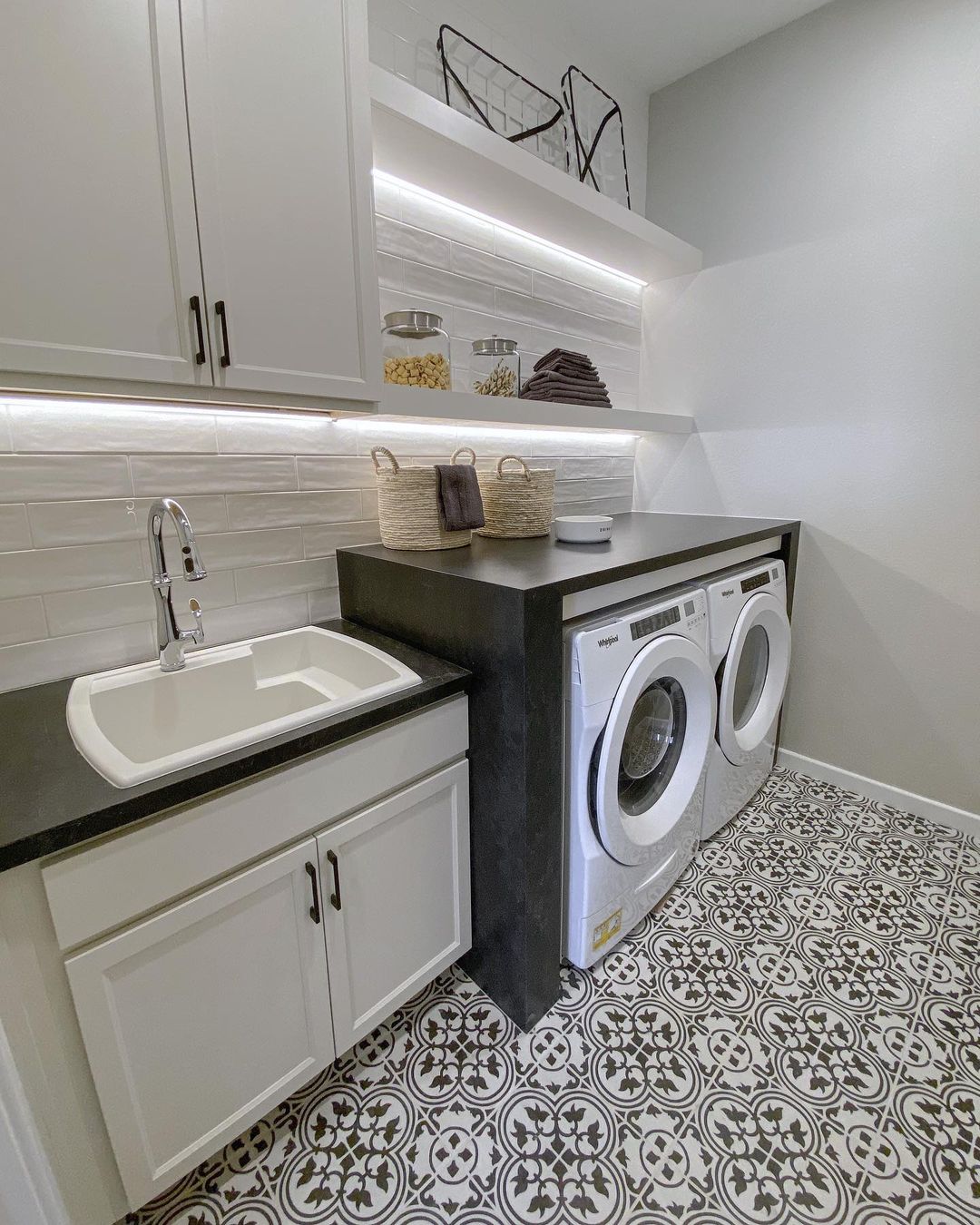
Use Light and Neutral Color Palettes
Light colors help a long narrow laundry room feel more open and less confined. Soft neutrals, light grays, and warm whites reflect light and reduce visual heaviness.
Using a consistent color palette across walls, cabinets, and trim creates a seamless look. This continuity helps the room feel wider and more balanced.
Incorporate Reflective Surfaces
Reflective surfaces bounce light around the room and enhance brightness. Glossy finishes, glass cabinet fronts, and polished countertops contribute to a lighter feel.
Mirrors can also be used strategically to reflect natural or artificial light. Even small reflective elements make a noticeable difference in narrow spaces.
Maintain Visual Simplicity
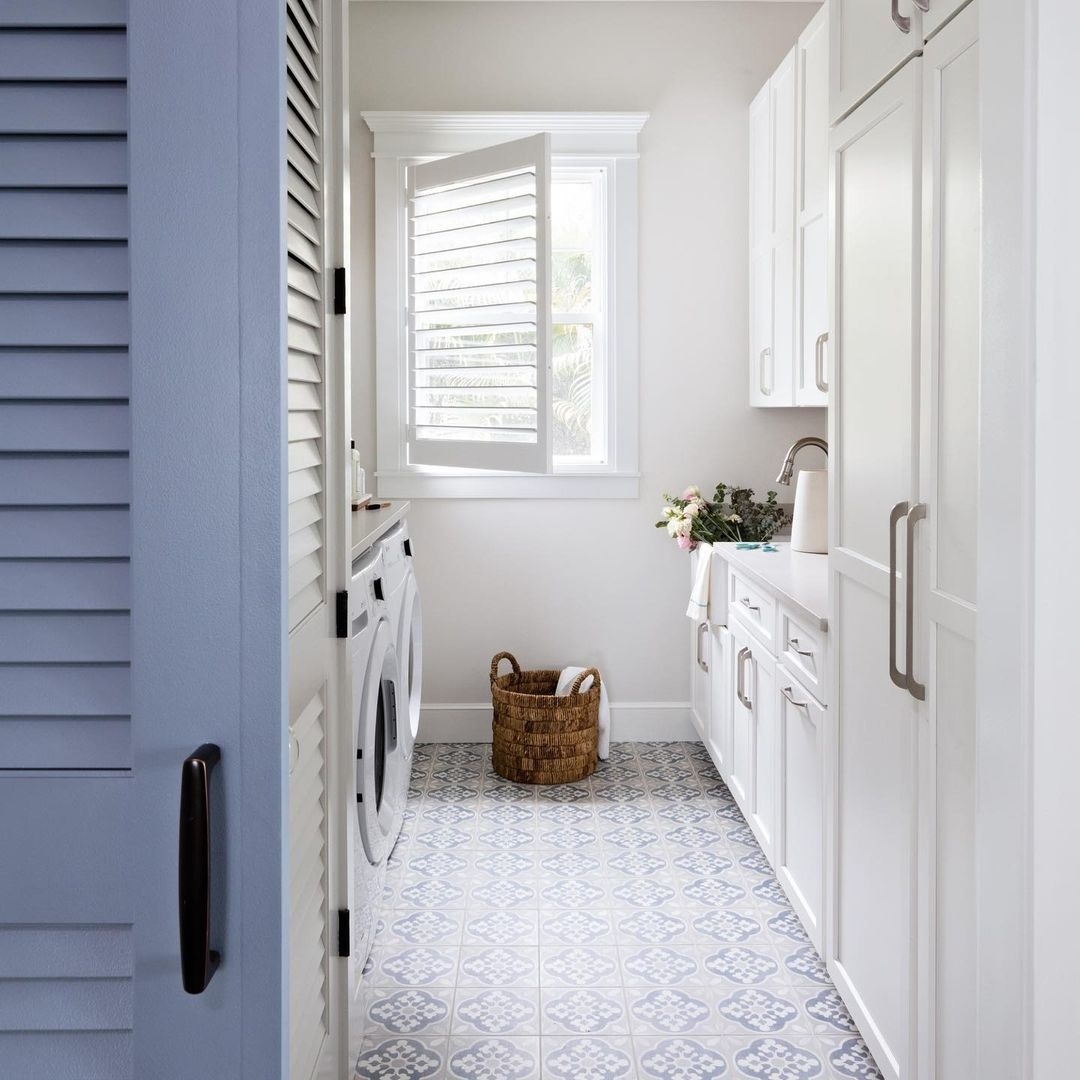
Reducing visual clutter is just as important as increasing light. Limiting bold contrasts and busy patterns helps the room feel calmer and more spacious.
Simple finishes and clean lines support a cohesive design. A restrained approach prevents the space from feeling crowded.
Layer Lighting for Function and Comfort
Proper lighting improves both function and atmosphere. Overhead lighting provides general illumination, while task lighting supports specific work areas.
Layered lighting ensures the room feels bright without harsh shadows. Well placed lighting helps the space feel larger and more comfortable to use.
Add Multi Functional Features
Install Countertops Over Appliances
Adding a countertop over the washer and dryer creates a dedicated surface for folding and sorting. This approach makes use of space that would otherwise remain unused.
A continuous countertop also helps visually unify the appliances. The result is a cleaner and more organized appearance.
Use Fold Down or Pull Out Work Surfaces
Fold down and pull out surfaces provide flexibility in a narrow laundry room. These features offer workspace when needed and can be tucked away when not in use.
This type of solution is especially useful in tight layouts where permanent counters are not practical.
Incorporate Built In Utility Features
Built in ironing boards, retractable drying racks, and integrated hampers add function without increasing the footprint of the room.
These features keep essential tools close at hand while maintaining a streamlined layout. Choosing a compact drying option that works vertically or folds away can help maintain clear walkways.
Combine Storage With Function
Multi functional storage solutions serve more than one purpose. Cabinets with integrated hampers or shelves that double as folding stations improve efficiency.
Combining function reduces the need for extra furniture. This helps keep the room organized and easy to navigate.
Keep Organization Simple and Accessible
Store Everyday Items Within Easy Reach
Frequently used laundry supplies should be stored where they are easy to access. Keeping detergents, stain removers, and tools close to the washer saves time and effort.
Items used less often can be stored higher or in closed cabinets. This approach keeps the room functional without overcrowding work areas.
Balance Open and Closed Storage
Open storage allows for quick access and works well for everyday essentials. Closed storage helps hide clutter and creates a cleaner look.
Using both types of storage provides flexibility. A balanced mix keeps the room organized while maintaining visual order.
Use Clear Zones for Organization
Dividing the laundry room into zones improves efficiency. Washing, folding, and storage areas should be clearly defined, even in narrow spaces.
Zoning helps prevent clutter from spreading. It also makes the room easier to maintain over time.
Avoid Overfilling the Space
Even well designed storage can become overwhelming if overfilled. Leaving some empty space helps the room feel lighter and easier to use.
Simple organization systems are easier to maintain. A restrained approach supports long term functionality.
Design Solutions for Walk Through Laundry Rooms
Maintain Clear Circulation Paths
In a walk through laundry room, maintaining a clear path of travel is essential. The space must allow movement without interfering with laundry tasks.
Appliances and storage should be positioned to avoid narrowing the main walkway. Clear circulation helps the room function smoothly as both a workspace and a passage.
Zone the Space Without Blocking Flow
Zoning is still important in a walk through layout, but it must be done carefully. Washing and folding areas should be placed to one side rather than in the center of the room.
This approach keeps the walkway open while preserving functionality. Thoughtful zoning improves efficiency without disrupting movement.
Use Symmetry to Improve Visual Balance
Symmetry helps a narrow walk through laundry room feel more organized. Aligning cabinets, shelves, and appliances creates a sense of order.
Balanced layouts reduce visual distraction. This makes the space feel calmer and easier to navigate.
Choose Storage That Stays Close to the Walls
Storage in walk through laundry rooms should remain slim and wall mounted whenever possible. Bulky furniture can quickly block circulation.
Keeping storage close to the walls preserves usable space. Applying proven layout strategies used in mudrooms can improve flow and functionality.
Finishing Touches That Do Not Take Up Space
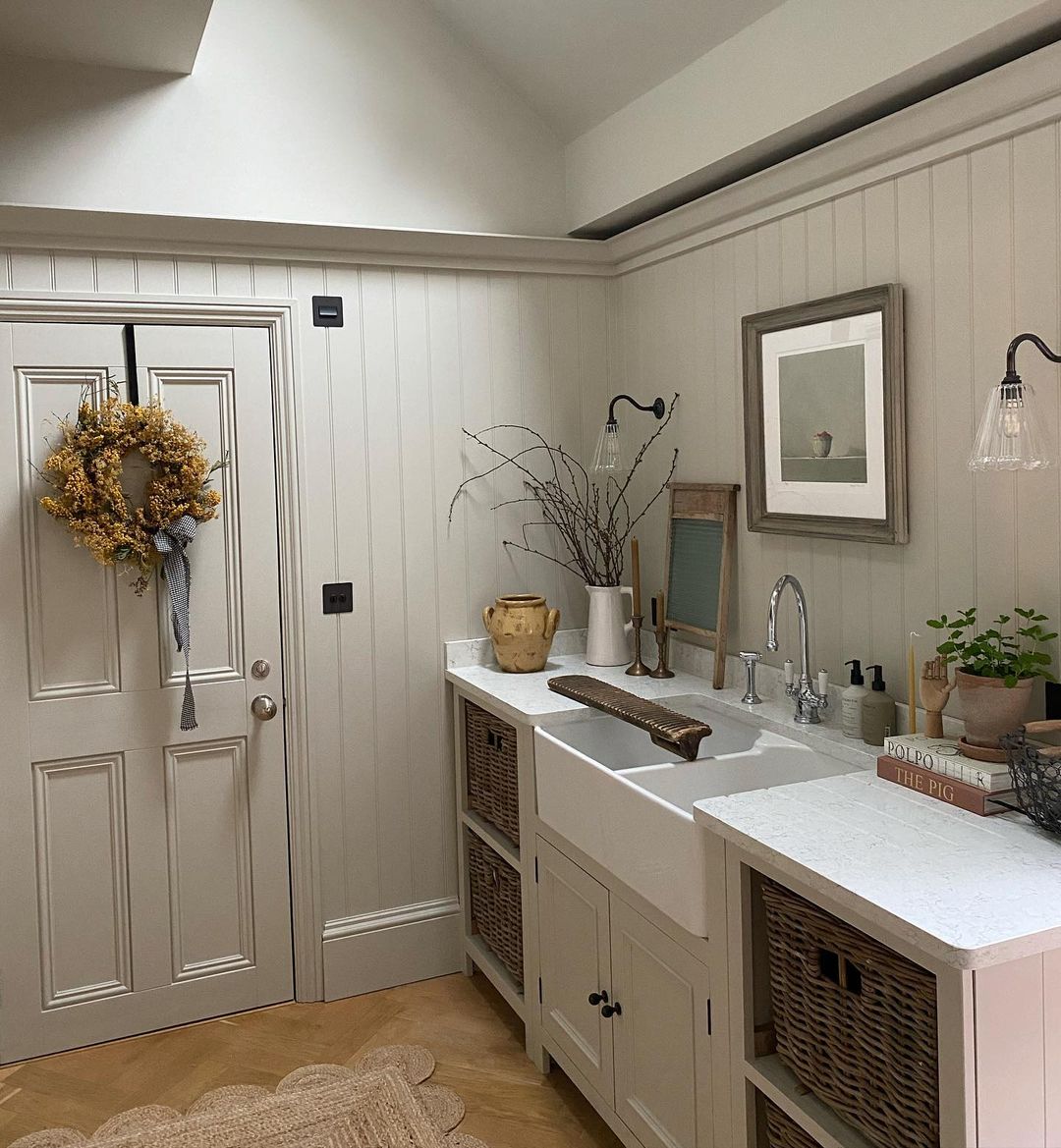
Choose Wall Mounted Lighting
Wall mounted lighting provides illumination without using valuable surface area. Sconces or slim fixtures free up space that would otherwise be taken by lamps or bulky overhead designs.
Good lighting improves both function and comfort. Well placed fixtures make the room easier to use at any time of day.
Add Functional Accessories With Purpose
Accessories should serve a clear function in a long narrow laundry room. Wall mounted drying bars, slim hooks, and compact baskets add utility without clutter.
Choosing items with a defined purpose helps maintain organization. Decorative elements should always support usability.
Keep Decor Minimal and Intentional
Minimal decor works best in narrow spaces. A small piece of wall art or a simple framed print can add personality without overwhelming the room.
Limiting decorative elements keeps the space feeling open. A restrained approach helps maintain visual balance.
Use Floor Coverings Sparingly
If a rug or runner is used, it should be slim and low profile. This adds comfort without interrupting movement through the room.
Simple floor coverings define the space while preserving flow. Function should always come first.
Conclusion
Maximizing space in a long narrow laundry room comes down to thoughtful planning and intentional design choices. When layout, storage, and workflow work together, even the most challenging spaces can become efficient and comfortable to use.
By choosing layouts that suit the room’s shape, using vertical and slim storage solutions, and keeping organization simple, it is possible to improve both function and flow. Small design decisions, such as door styles, lighting, and multi functional features, also play an important role in making the space feel more open and manageable.
Rather than focusing on square footage alone, this approach prioritizes usability and smart design. With the right strategies in place, a long narrow laundry room can support daily routines while remaining organized, practical, and visually balanced.
For a deeper dive into decorating a beautiful and practical laundry space, check out ‘Your Ultimate Guide to Designing a Stylish and Functional Laundry Room.’
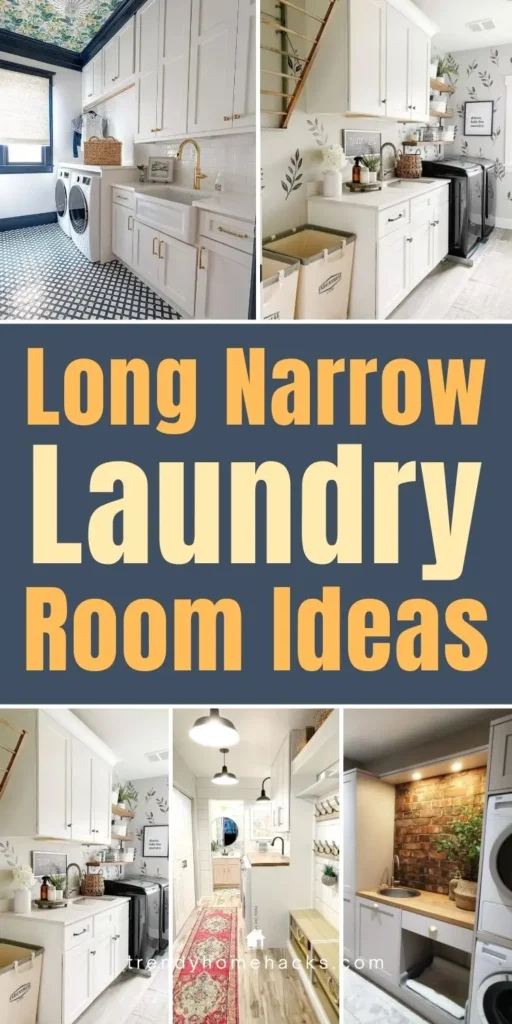
Don’t forget to save this pin to bookmark this article for later!
Related Posts:
- Clever Storage: Unusual Solutions for a More Efficient Home
- Unique Ladder Hacks for Creative and Smart Home Organization
- The Best Storage Bins for an Industrial Chic Look
- 10 Creative Under Stairs Storage Ideas to Optimize Your Space
- The Best Vintage Accents For Your Rustic Farmhouse Laundry Room