
There’s something so satisfying about turning an ordinary shelf into a beautiful little feature in your home. A few favorite books, a pretty vase, or a collection of meaningful objects can make a shelf feel special. But sometimes, it’s what’s behind those pieces that makes the whole arrangement come together.
That’s where wallpaper comes in.
Whether it’s a delicate floral peeking out from behind a row of books or a bold geometric print bringing life to a simple bookcase, wallpaper has a lovely way of making shelves feel more interesting, layered, and personal.
And the best part? You don’t have to wallpaper an entire room to enjoy the effect.
From cozy kitchen shelves and vintage display cabinets to modern floating shelves and playful children’s bookcases, there are so many creative ways to work with pattern.
If you’ve been looking for wallpaper shelf ideas that bring a little more character into your home, these 12 decorating approaches offer plenty of inspiration, along with simple styling tips to help you make each look your own.
1. Add Pattern to the Back of a Bookcase
A bookcase is one of those pieces of furniture that can be both practical and beautiful. It holds the books you love, the little treasures you’ve collected, and perhaps a few things that simply make you smile.
And if you love the idea of making your bookshelves more than just a place for books, there are plenty of creative possibilities to explore. From decorative displays to unexpected storage solutions, these creative and stylish uses for your bookshelves offer more inspiration for making the most of the shelving you already have.
Adding wallpaper to the back of a bookcase gives all those familiar objects a lovely new setting.
Instead of disappearing against a plain background, your books, ceramics, and decorative accents stand out against a layer of color or pattern. Even a basic white bookcase can feel more thoughtfully designed with the right wallpaper behind its shelves.
For a softer, more relaxed look, try a small botanical print, a delicate stripe, or a muted geometric pattern. If your bookcase is dark wood, a lighter wallpaper can brighten the interior and help your favorite pieces stand out.
The key is to let the wallpaper complement what you already have.
Try grouping books both vertically and horizontally, leaving room for a ceramic vase, a framed photograph, or a small decorative bowl. Those quieter spaces allow the wallpaper to show through and keep the shelves from feeling crowded.
You want the pattern to be part of the display, not something you have to work around.
2. Create a Soft, Romantic Look with Floral Wallpaper
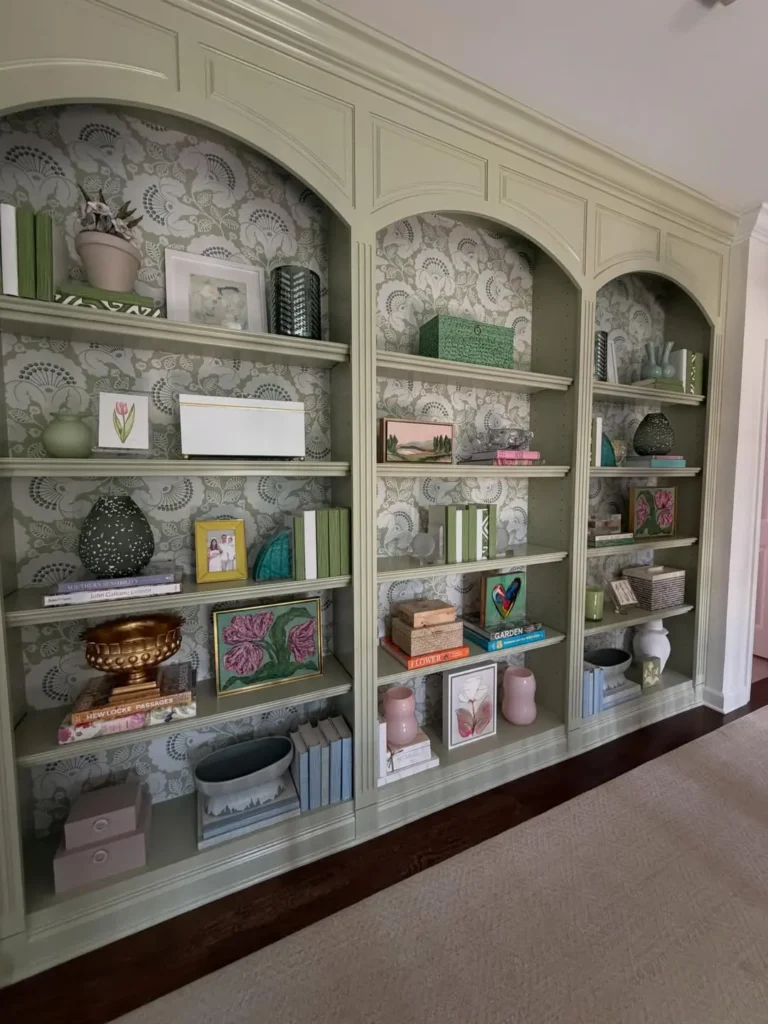
Floral wallpaper and open shelving make such a charming combination, especially if you love interiors that feel warm, welcoming, and a little nostalgic.
Picture a painted bookcase with a faded floral pattern tucked behind stacks of old books, cream-colored pottery, and a small glass vase filled with flowers. There’s a gentle, collected quality to this look that feels right at home in a cozy bedroom, living room, or cottage-inspired space.
The beauty of floral wallpaper is how easily you can adapt it to your decorating style.
Tiny blossoms in dusty pink, sage green, or muted blue create a delicate, vintage-inspired look. Larger botanical prints feel a little more dramatic, particularly when paired with simple shelving and understated accessories.
To keep the arrangement fresh, choose just a few colors from the wallpaper and repeat them through the objects on your shelves.
For example, a soft green floral print might look lovely with ivory ceramics, natural wood, and a few touches of brass.
And don’t feel you need to fill every shelf. A little breathing room helps those beautiful floral details remain visible.
3. Make a Statement with Bold Geometric Prints
If your decorating style leans toward modern, eclectic, or playful, geometric wallpaper can bring an entirely different energy to your shelves.
Think bold stripes, oversized arches, abstract shapes, or repeating patterns in colors that make you happy.
A simple bookcase lined with a graphic wallpaper can become a standout feature in a living room, home office, or creative workspace. It’s a fun way to introduce something unexpected without committing to a large patterned wall.
The trick is finding the right balance between the wallpaper and what you display in front of it.
Bold patterns already bring plenty of visual interest, so give them room to shine. Sculptural ceramics, simple book stacks, and a few carefully chosen decorative objects often work better than lots of smaller accessories.
Pattern scale matters, too.
A large geometric design can look striking inside a wide bookcase, where there’s enough space to appreciate its shapes. In narrow compartments, smaller repeating patterns may be easier to recognize.
And if you love expressive interiors, this is a wonderful opportunity to experiment with color. Our guide to funky home decor ideas explores more ways to bring bold patterns, playful accents, and personality into your home.
4. Bring Warmth to Kitchen Shelves with Wallpaper
Kitchen shelves are often filled with everyday essentials: mugs, bowls, plates, glass jars, and the dishes we reach for most.
But practical doesn’t have to mean plain.
Wallpaper behind open kitchen shelves can add warmth and charm, turning ordinary storage into a lovely part of the room’s decor.
Imagine soft blue patterned wallpaper behind white dishes, or a small vintage-inspired print paired with warm wooden shelves and simple stoneware. Even a subtle stripe can give an otherwise neutral kitchen a little extra character.
For a farmhouse-inspired kitchen, consider gingham, understated florals, or traditional prints in muted colors. In a more contemporary kitchen, a simple geometric pattern or a textured wallpaper can create a clean, polished backdrop.
What makes this approach especially appealing is that your everyday dishes become part of the decoration.
Try grouping matching plates together, stacking bowls neatly, and leaving a little space between collections. Wooden cutting boards, glass containers, and a small plant can add warmth without making the shelves look overly styled.
Just be thoughtful about where you use wallpaper in a kitchen.
Areas near sinks, stovetops, and other sources of water, steam, or grease need suitable materials and finishes. A washable wallpaper approved for the location is generally more practical than delicate paper, especially on shelves used regularly.
Choose a spot where the wallpaper can look beautiful without becoming another surface you constantly need to clean.
5. Give Floating Shelves a Beautiful Wallpaper Backdrop
Wallpaper doesn’t always have to go inside a bookcase.
Sometimes, the most beautiful approach is to use it on the wall behind floating shelves.
This combination creates a layered look that feels both decorative and architectural. The wallpaper establishes the backdrop, while the shelves bring dimension and give you space to display your favorite pieces.
It looks good above a desk, a small console table, or a cozy reading corner.
If you’re creating a workspace or reading area, wallpaper-backed shelving can be effective in bringing the whole space together. For more inspiration, explore these home office library designs for different decor styles and discover how beautiful shelving can become part of a comfortable, inviting room.
For a light, airy look, try pale botanical wallpaper with natural oak shelves. If you’re drawn to something moodier, deep green or navy wallpaper paired with warm wood can create a beautiful contrast.
You can also use simple white shelves against patterned wallpaper for a crisp, fresh appearance.
Pay attention to the shelf material and how it relates to the wallpaper. Natural wood brings warmth, while painted shelves can either blend into the wall or create a stronger contrast.
When styling, mix objects of different heights and shapes. A taller vase, a small stack of books, and a framed print can create an easy, relaxed arrangement.
The wallpaper is already adding plenty of detail, so you don’t need to fill every inch of shelf space.
Let the wall and the objects work together.
6. Add Unexpected Charm to a Small Shelf Nook
Some of the most delightful decorating opportunities are found in the smallest corners of a home.
A narrow alcove, a recessed wall niche, or a little built-in shelf beside a doorway might not seem particularly exciting at first.
But add wallpaper, and suddenly that overlooked space has a personality of its own.
Small nooks are especially well suited to patterned wallpaper because they let you experiment without overwhelming the room.
You might choose a delicate floral for a cottage-style bedroom, a soft geometric print for a hallway, or a colorful botanical design for a cheerful entryway.
A compact space can also be a wonderful place to use a wallpaper pattern you love but wouldn’t necessarily choose for an entire wall.
The secret is to keep the styling simple.
A small stack of books, one beautiful ceramic vase, or a favorite decorative object may be all you need. If the niche has several shelves, vary the height and placement of accessories rather than repeating the same arrangement on every level.
A little contrast between the wallpaper and the objects will help the display stand out.
And sometimes, leaving part of the nook completely open is what makes the wallpaper feel most special.
7. Try Subtle Textured Wallpaper for an Understated Look
Not every wallpaper shelf idea needs a bold color or a noticeable pattern.
Sometimes, the quietest details make a space feel the most inviting.
Textured wallpaper is a beautiful option if you prefer a calm, neutral interior but still want your shelves to have a little more depth.
Think linen-look wallpaper in warm ivory, a grasscloth-inspired finish in soft taupe, or a delicate woven texture in pale gray.
These finishes introduce subtle variation without drawing too much attention away from the pieces on display.
They work particularly well with minimalist shelving, where every object has a little room around it.
Try pairing textured wallpaper with natural wood shelves, handmade ceramics, simple framed artwork, and a few carefully chosen books.
The combination of soft texture, organic materials, and gentle color creates a look that feels warm without being busy.
You can also play with contrast.
A pale textured wallpaper behind dark wood shelves can make the wood grain appear richer, while a slightly deeper neutral background can add definition to white or cream accessories.
If you’re considering natural grasscloth rather than a printed alternative, remember that it can be more delicate and harder to clean. For shelves that see frequent use, a durable, wipeable material may be a better choice.
The overall effect should feel relaxed, balanced, and quietly beautiful.
8. Use Wallpaper to Refresh a Vintage Hutch or Display Cabinet
There’s something lovely about older furniture, especially pieces that have a little history and character.
A vintage hutch, a painted china cabinet, or an old wooden bookcase can feel even more special with wallpaper tucked inside.
It’s a beautiful way to refresh a piece without covering up everything that makes it unique.
Imagine a weathered wooden cabinet with a soft botanical wallpaper behind stacks of white dishes. Or a painted vintage hutch lined with a delicate blue-and-white print, displaying glassware, pottery, and a few treasured finds.
These combinations have a collected, lived-in charm that feels comfortable rather than overly decorated.
Traditional florals, toile-inspired prints, and small repeating patterns often work beautifully with vintage furniture. They echo the character of older pieces while giving the interior a fresh decorative layer.
For a more unexpected look, try pairing a vintage cabinet with a modern geometric wallpaper.
That contrast between old and new can feel wonderfully personal.
When arranging your display, let the cabinet itself guide you. A piece with detailed trim or ornate doors may look best with a quieter print, while a simple cabinet can handle something more expressive.
If you enjoy blending furniture from different eras, our ideas for mixing vintage character with modern decor offer more inspiration for creating a home that feels uniquely yours.
One practical detail is worth remembering: if the cabinet is an antique or has an original finish you want to preserve, avoid applying adhesive directly to valuable wood. A removable backing panel can give you the patterned look without permanently altering the furniture.
9. Add a Playful Touch to Children’s Room Shelves
Children’s rooms are wonderful places to have a little fun with wallpaper.
From tiny stars and cheerful animals to colorful rainbows and whimsical illustrations, there are so many patterns that can make ordinary shelves feel playful and inviting.
A simple bookcase with wallpaper behind its shelves can become a charming spot for bedtime stories, favorite toys, and little keepsakes.
And because the wallpaper is used in a relatively small area, you can bring in more color without making the entire room feel busy.
For a softer nursery look, try gentle animal illustrations, tiny florals, or delicate patterns in muted colors.
For an older child’s bedroom or playroom, you might choose a brighter geometric print, colorful stripes, or a wallpaper inspired by something they love.
The key is to balance those cheerful patterns with practical storage.
Use baskets or bins to keep smaller toys contained, arrange favorite books where they’re easy to reach, and leave a little space for decorative objects.
If the wallpaper is particularly colorful, simpler shelf accessories can help everything feel more organized.
Peel-and-stick wallpaper may also be appealing here, especially as children’s interests and tastes change over time. Just check that the product is suitable for the shelf surface.
And remember that bookcases and other tall furniture should be securely anchored to the wall in children’s spaces.
Beautiful shelves are even better when they’re safe and easy to use.
10. Give Your Shelves a Coordinated Color Palette
Sometimes the secret to beautiful shelves isn’t adding more accessories. It’s finding a color palette that makes everything feel connected.
Wallpaper can be a lovely starting point for that.
Rather than choosing your decorative objects first, try selecting a wallpaper you love and pulling a few colors from its pattern.
For example, imagine a bookcase lined with muted sage green wallpaper. Cream pottery, natural wood, warm brass, and a few darker green accents could create a soft, cohesive display.
Or perhaps you’ve chosen wallpaper with dusty blue flowers and warm beige details. Repeating those colors through books, ceramics, and small accessories helps everything feel thoughtfully arranged.
You don’t need every object to match.
In fact, a little variation makes shelves feel more relaxed and personal.
Choose two or three main colors to repeat, then add different textures and finishes to keep the display interesting.
A smooth ceramic vase, a woven basket, a stack of linen-bound books, and a wooden bowl might all share a similar palette while bringing something different to the arrangement.
Also pay attention to where the color appears.
If several darker objects are grouped on one side, try balancing them with something of similar visual weight on another shelf.
This creates a more comfortable sense of balance without making the display feel too perfectly symmetrical.
If you’re finding it tricky to get the arrangement just right, it helps to know which decorating choices can make shelves feel cluttered or unbalanced. Our guide on avoiding common mistakes when accessorizing shelves and bookcases shares more tips for creating a display that feels thoughtfully styled without looking too arranged.
When wallpaper and decorative accents share a few colors, the whole bookcase begins to feel like one beautiful composition.
11. Wallpaper the Shelves Themselves for a Surprising Detail
Most people think about wallpapering the back of a bookcase, but there’s another creative option that’s easy to overlook.
Why not wallpaper the shelves themselves?
Adding wallpaper to horizontal shelf surfaces or the visible front edges can introduce a small, unexpected touch of pattern.
It’s particularly charming inside smaller bookcases, cubbies, and decorative display shelves.
Imagine a white bookcase with delicate striped wallpaper lining each shelf, or a vintage cabinet with a tiny floral pattern peeking out beneath stacks of dishes.
You could even use a contrasting wallpaper on the shelf edges to create a subtle decorative trim.
Because these surfaces are relatively narrow, smaller repeating prints tend to work especially well. They allow you to appreciate the pattern without losing too much of the design beneath the objects sitting on top.
For a more coordinated look, choose wallpaper that shares a color with the furniture.
A cream-and-blue print could look lovely against a pale blue cabinet, while warm neutrals can soften dark wooden shelves.
Keep in mind that horizontal surfaces receive more wear than decorative back panels.
Books, dishes, and storage containers can scuff or damage wallpaper when they’re moved around. If you want to cover shelves that are used regularly, look for a durable, cleanable material and consider appropriate surface protection.
For purely decorative shelves, you have a little more freedom to experiment with delicate finishes.
It’s a small design detail, but one that can make an ordinary piece of furniture feel wonderfully individual.
12. Start Small with Peel-and-Stick Wallpaper
If you love the idea of wallpaper-lined shelves but aren’t quite ready to commit, peel-and-stick wallpaper can be a practical place to start.
It’s an approachable option for experimenting with color and pattern, especially on a small bookcase, display shelf, or cubby.
You might begin with a single shelf compartment or wallpaper just the backing panel of a small bookcase.
That gives you a chance to see how the pattern looks with your books and accessories before taking on a larger project.
It’s also a lovely opportunity to try something outside your usual decorating style.
Perhaps you’ve always admired botanical prints but tend to decorate with neutrals. Or maybe a bold stripe catches your eye, even though most of your home feels soft and understated.
A small wallpaper project lets you explore those ideas without changing the entire room.
Before applying peel-and-stick wallpaper, check the manufacturer’s surface recommendations. Smooth, clean, fully cured finishes are generally better candidates than rough, dusty, or delicate surfaces.
And while removable wallpaper offers more flexibility than traditional pasted wallpaper, removal isn’t guaranteed to be damage-free on every finish. Testing a discreet area first is always a good idea.
Once your wallpaper is in place, have fun styling around it.
Move a few accessories from another room, rearrange your books, or introduce a color that picks up one of the tones in the pattern.
Sometimes the most enjoyable decorating projects are the ones that begin with a small idea and leave room for a little experimentation.
How to Choose the Right Wallpaper for Your Shelves
With so many beautiful wallpaper designs available, choosing just one can be the hardest part.
But a few thoughtful decisions can make the process much easier.
Start by looking at your shelves as a whole. Consider their size, material, color, and the objects you plan to display.
Think about pattern scale. Small, repeating prints often work beautifully in narrow shelf compartments, while larger patterns usually need more uninterrupted space to be appreciated. If a bookcase has several closely spaced shelves, remember that the shelves themselves will interrupt the wallpaper design.
Consider the surrounding room. Your wallpaper doesn’t need to match everything, but it should relate to the existing colors and overall feeling of the space. Picking up a color from your curtains, cushions, rug, or artwork can create a lovely sense of continuity.
Let the wallpaper and accessories share the attention. A busy pattern may look best with simple ceramics and fewer decorative objects. A subtle wallpaper gives you more freedom to layer books, textures, and collected pieces.
Choose a suitable material. Decorative bookcase backs generally experience less wear than kitchen shelves or horizontal surfaces. Think about moisture, sunlight, cleaning, and how frequently items will be moved before selecting a wallpaper.
Test before committing. If possible, place a wallpaper sample behind your existing shelf accessories. Look at it in daylight and again under evening lighting. Patterns and colors can feel surprisingly different depending on the room and what sits in front of them.
Above all, choose something that makes you happy when you look at it.
Your shelves don’t have to resemble a perfectly arranged showroom. They’re part of your home, filled with things you use, enjoy, and want to keep close.
The wallpaper should make those everyday pieces feel even more special.
Final Thoughts: Make Your Shelves Feel Like You
One of the loveliest things about decorating with wallpaper is how much personality it can bring to such a small space.
A simple bookcase can feel warmer with a delicate floral print. Floating shelves can become a beautiful feature against a patterned wall. And an old cabinet can find new life with a little color tucked inside.
You don’t need to tackle a whole room or make a dramatic change to enjoy the effect.
Start with a shelf you already own, choose a pattern that speaks to your style, and build the display around the things you love.
Whether your taste leans toward soft, understated textures or bold, colorful prints, the most beautiful wallpaper shelf ideas are the ones that feel at home in your space.
And sometimes, all it takes is a little wallpaper behind a favorite collection to make an ordinary corner feel wonderfully personal.